
02From the lower jaw to the skull
Treatment Principles · Two Connections
Why the
Jaw Joint Matters
A small misalignment of the jaw joint:
its influence can reach the alignment of the body and the central nervous system.
The bone connection, leading to the skull and spine,
and the nerve connection, which regulates sensation and movement.
We look at how far the influence of the jaw joint extends along these two routes.
01 · Bone Connection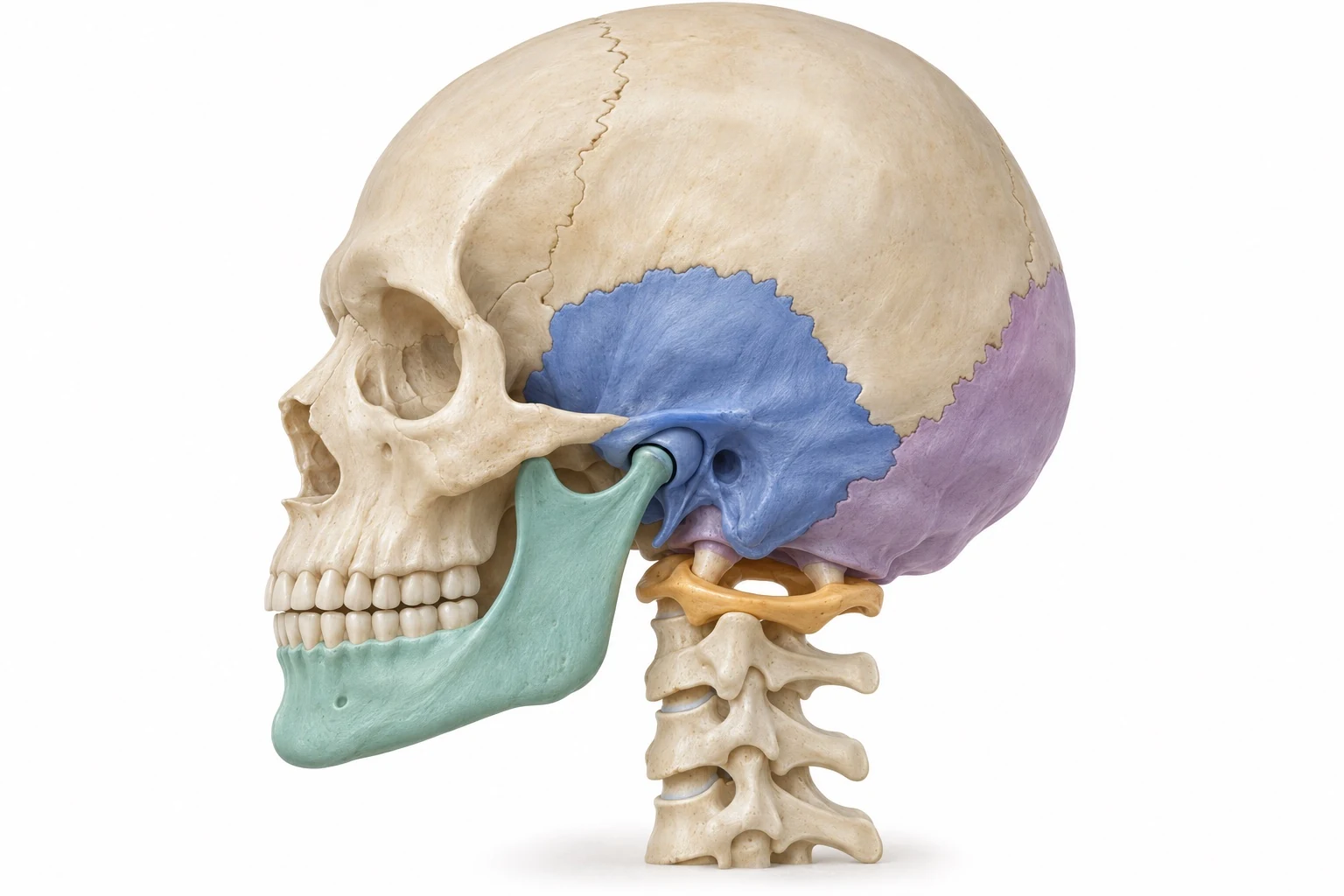
02 · Nerve Connection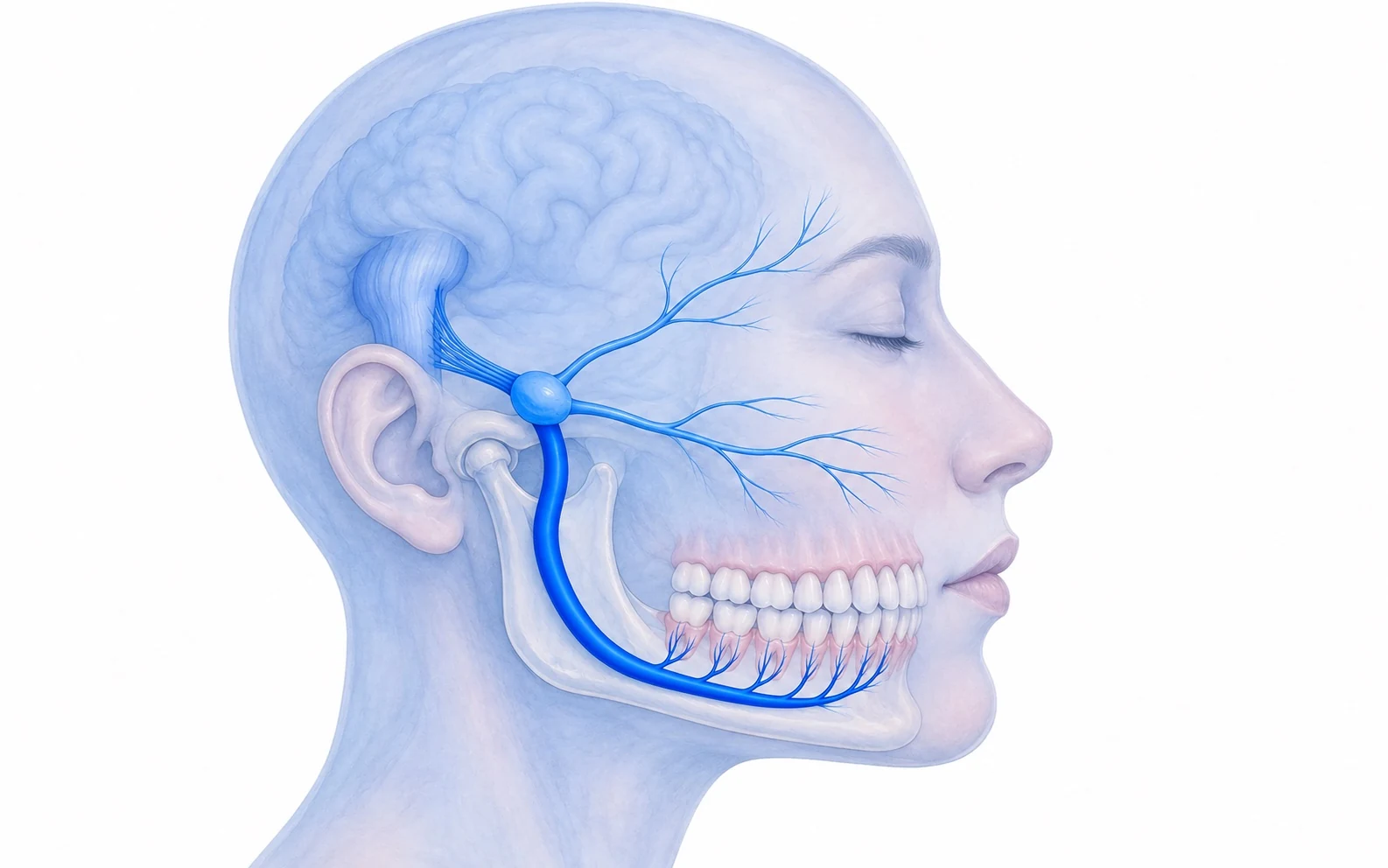
01 · Bone Connection
From the jaw joint
to the skull and spine.
Misalignment of the jaw joint affects the skull and the first cervical vertebra,
and that change carries down the spine to the bones of the whole body.
01First, the joint that moves
When you open and close your mouth,
the head of the jaw joint moves too.
At the end of the lower jaw bone is the head of the joint, the condyle. As you open and close your mouth it rotates and glides, producing the movement between the skull and the lower jaw.
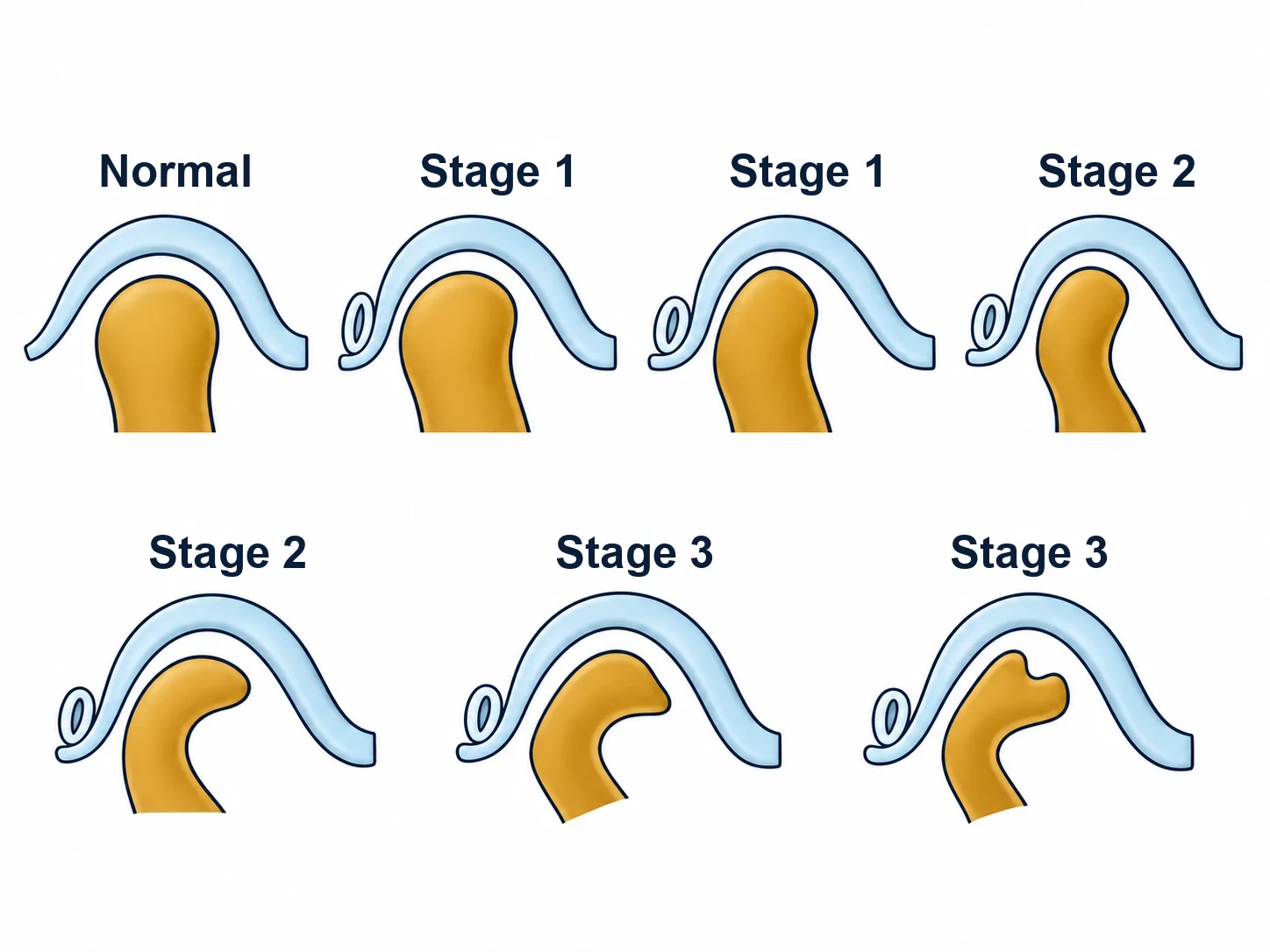
If the jaw is out of alignment and the position and movement of the condyle change, strain can build up in the joint. Over time, the bone of the condyle can gradually wear away and become thinner or shorter.
Misalignment of the jawChange in condyle position and movement
Change in the condyleThe bone wears away and becomes thinner or shorter
Jaw joint movement
Changes in the condyle
can lead to misalignment of the skull.
When the mouth is opened and closed repeatedly with the jaw out of alignment, strain can build up on the condyle. If the condyle wears and becomes thinner or shorter, the balance of the joint where it meets the skull can change as well.
From a change in the shape and height of the condyle
to misalignment of the skull it meets.
The lower jaw is connected to
03From the lower jaw to changes in the face
That is why misalignment of the lower jaw
leads to changes in facial shape and facial asymmetry.
Depending on the condition of each person’s jaw joint and the position of the lower jaw, the direction and form in which the face shifts can vary.
Side shift
Rotation 1
Rotation 2
Rotation 3
Rotation 4
04From the jaw joint to the whole body
From misalignment of the jaw joint,
through the skull and spine, to imbalance of the whole body
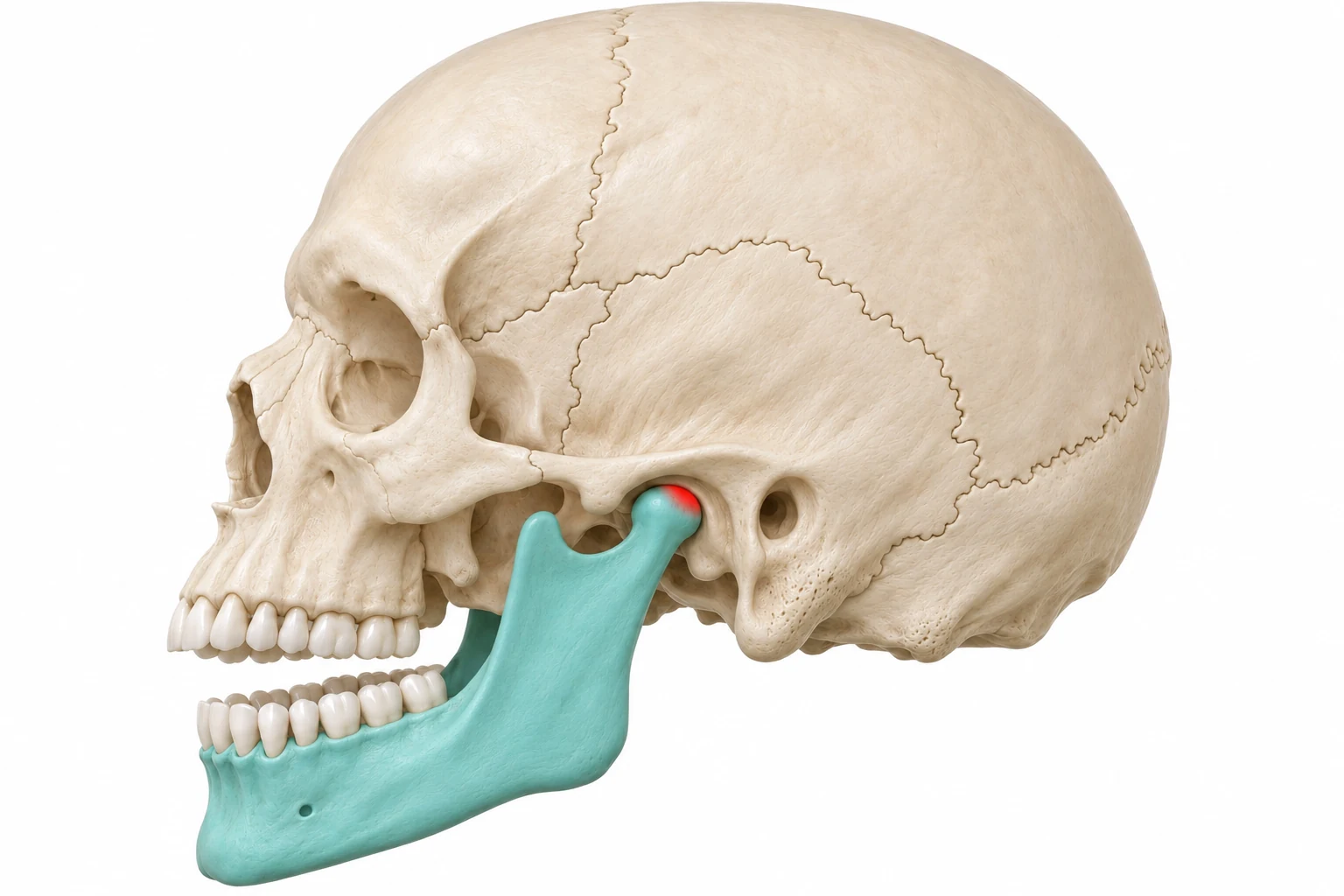
Jaw joint (TMJ)
MisalignmentSkull
MisalignmentSphenoid · temporal bones · occipital bone
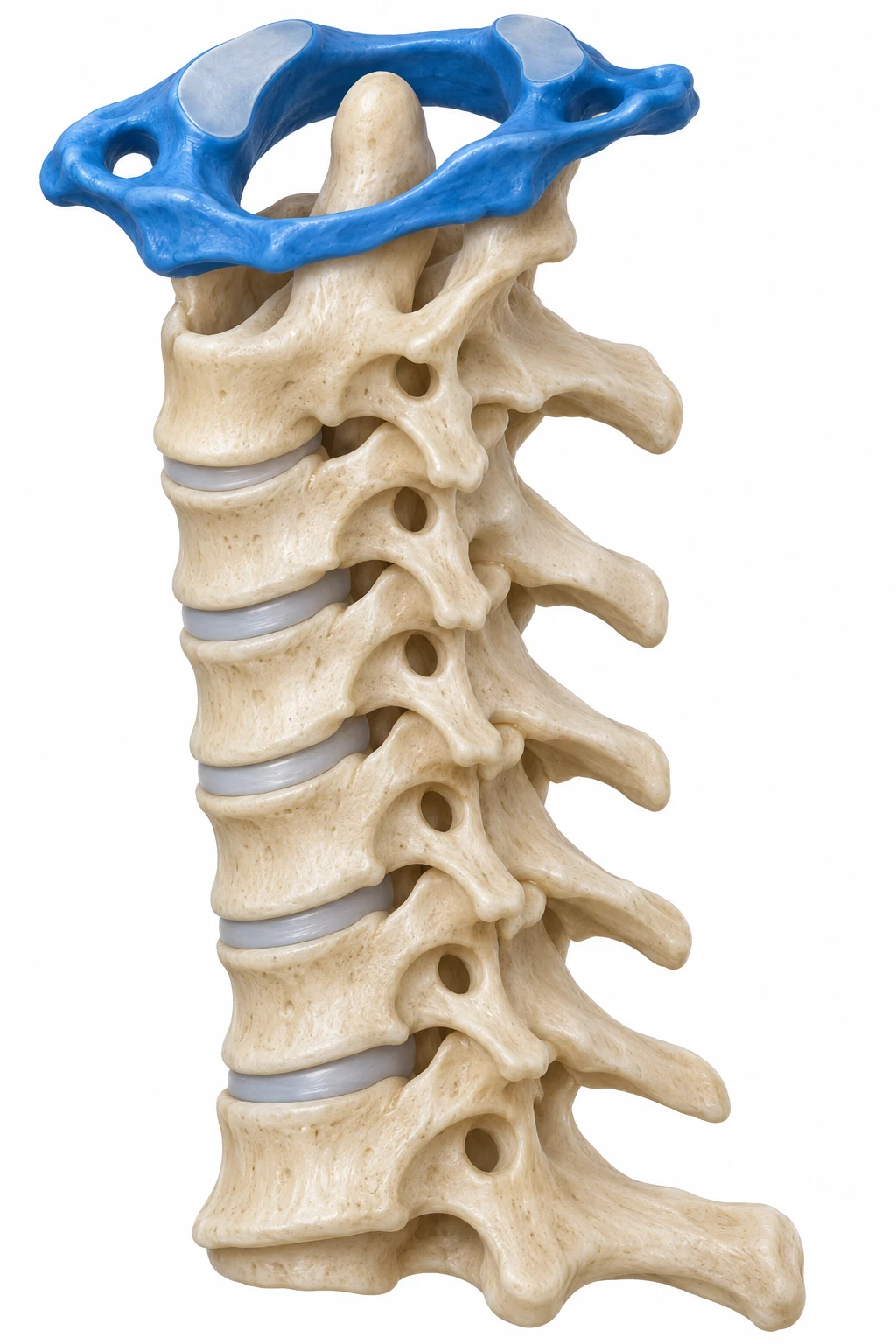
First cervical vertebra · C1
MisalignmentThe first cervical vertebra, directly below the head
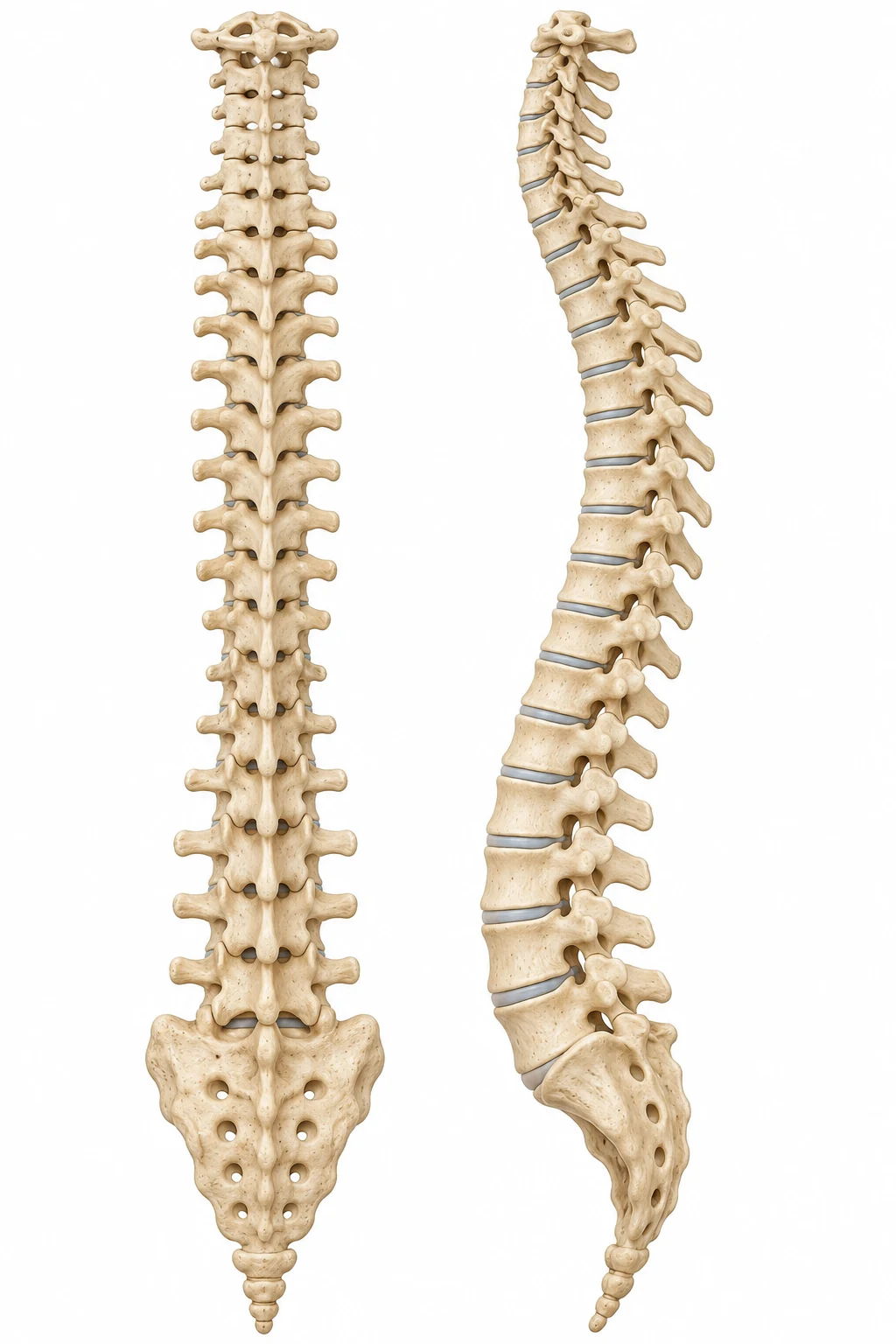
The spine continuing downward
MisalignmentCervical → thoracic → lumbar
Whole body
ImbalanceShoulders · spine · pelvis
Jaw joint → skull → first cervical vertebra → spine → whole body
05A golf analogy
Just as a small difference in angle at the moment of impact widens greatly over distance,
a small misalignment that begins in the jaw can also lead to imbalance of the whole body.
Golf · The moment of impact

A small difference in angle→A wide gap at a distance
The body · Connections that begin at the jaw
A small misalignment of the jaw→Imbalance of the whole body
02 · Nerve Connection
From small sensations in the mouth
to the nervous system that regulates the body’s responses.
Where does the information sensed by the teeth, tongue, soft tissue and jaw joint go?
We follow the signal from its starting point through transmission and regulation.
01The link between the lower jaw and the largest cranial nerve
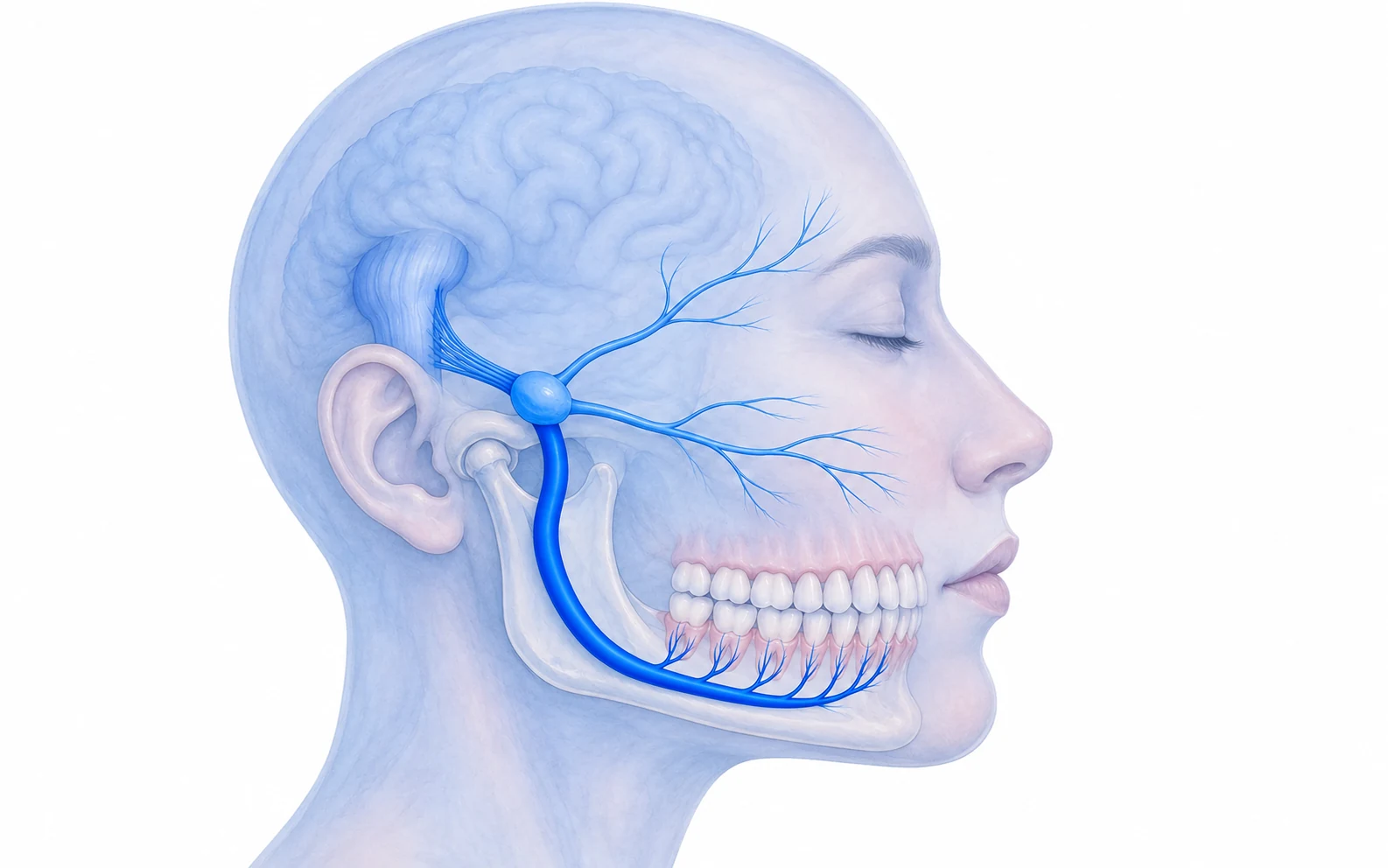
The trigeminal nerve is the largest cranial nerve,
and its largest branch runs to the lower jaw.
The trigeminal nerve is the largest of the 12 pairs of cranial nerves.
It divides into three main branches: the ophthalmic nerve (V1) to the eye and forehead, the maxillary nerve (V2) to the upper jaw, and the mandibular nerve (V3) to the lower jaw.
Of these, the largest branch is the mandibular nerve, V3. Nerve branches arising from V3 carry sensation from the jaw joint, the lower jaw and the lower teeth, and are also involved in the movement of the chewing muscles.
02Stimulation of the mandibular nerve reaches the central nervous system
Stimuli felt in the teeth, tongue, soft tissue and jaw joint
travel to the brain by way of the trigeminal nerve.
Origin and transmission · Teeth, tongue, soft tissue, jaw joint → trigeminal nerve
Sensing the stimulus
Sensory nerves detect contact and pressure on the teeth, tongue, soft tissue and jaw joint, and changes in movement.
Transmission along the trigeminal nerve
Sensations of contact, pressure, pain and movement felt in these areas are carried along the trigeminal nerve.
Arrival and regulation · Central nervous system
Processing in the brain and spinal cord
The information received is processed
so that sensation is perceived and muscle responses are regulated.
The teeth, tongue, soft tissue and jaw joint are connected to the central nervous system by the trigeminal nerve, so that even small stimuli produce responses in sensation, the muscles and the organs.
The jaw joint and the oral sensory nervous systemSensation from the teeth, soft tissue and jaw joint, and its nerve connections+
The jaw joint and the sensory nervous system
Where does sensory information from the teeth and jaw joint
go?
A variety of sensory receptors are found in the teeth and periodontal ligament, the oral mucosa, the chewing muscles and the jaw joint.
Sensory information from these tissues is carried to the central nervous system mainly through the trigeminal system, and plays a part in regulating chewing, speaking and the movements of opening and closing the mouth.
Tooth contact and the periodontal ligament
When the teeth come together, sensory receptors in the periodontal ligament pass on information about contact and force.
This sensory information is involved in regulating the force and movement of chewing food.
The jaw joint and the chewing muscles
The jaw joint is made up of the mandibular condyle, the articular disc, the articular surface of the temporal bone and the surrounding tissues.
Pain or restricted movement in the jaw joint can be related to chewing muscle function.
Irritation of the oral mucosa
The lining of the tongue and the inside of the cheeks senses contact, pressure, pain and other sensations.
When a sharp part of a tooth or a rough surface on a dental restoration touches it repeatedly, a localized sore and discomfort can develop.
The jaw joint and the muscles around the neck
Research has found an association between TMJ disorders and pain and dysfunction in the neck region.
However, a causal relationship in which a particular tooth contact directly causes symptoms in the spine, pelvis, knees or elsewhere has not been established.
03The gathered signals return to the body
The central nervous system is connected to the autonomic and somatic nervous systems
and influences organ function and sensory and motor function.
Autonomic nervous system · ANS
Regulation of organ function
HeartHeart rate and the heart’s responses
AirwayResponses of the bronchi and breathing
Stomach and intestinesDigestive movement and secretion
When the balance between the sympathetic and parasympathetic nerves is maintained, organ functions such as heartbeat, breathing and digestion are steadily regulated, which helps maintain the body’s homeostasis.
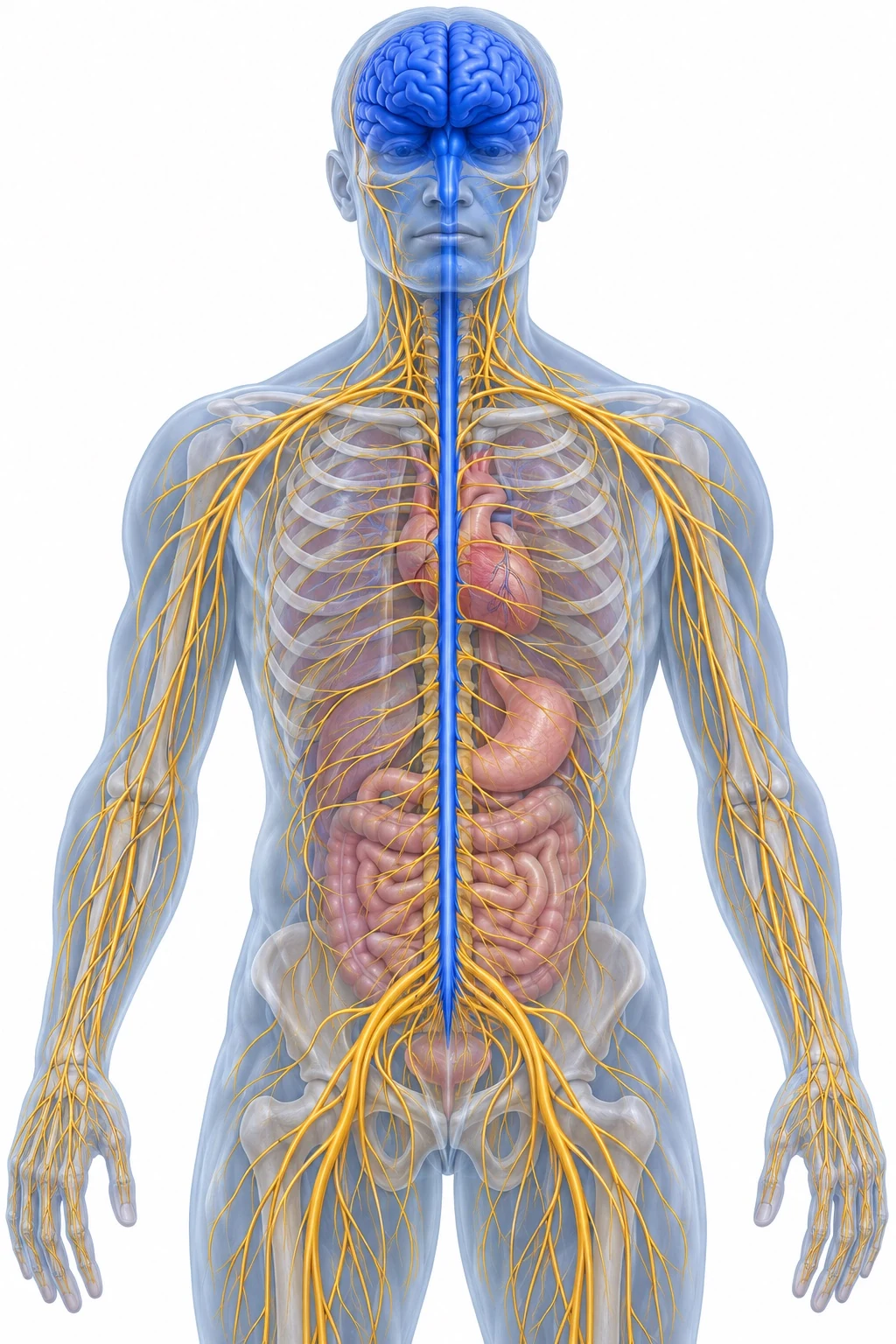 Brain and spinal cord · CNSThe brain and spinal cord integrate information
and regulate the responses and functions of the whole body.
Somatic nervous system · Somatic
Regulation of sensation and movement
Arms and handsSensation and muscle movement
Trunk · pelvisRegulation of posture and skeletal muscle
Legs and feetSensation and movements related to walking
Nerve signals travel from the brain and spinal cord to the arms, legs and trunk through sensory and motor nerves, so that posture, muscle function, movement and sensory perception work smoothly, which helps maintain the functional balance of the whole body.
04From a small stimulus in the mouth to the body’s response
When small harmful stimuli are repeated,
the nervous system’s responses can change as well.
Tiny harmful stimuli arising in the jaw joint, teeth and oral mucosa
are carried to the central nervous system by the trigeminal nerve.
If this stimulation persists, it can affect the way pain is processed and the way the muscles respond.
Through the autonomic and somatic nervous systems, the central nervous system also takes part in regulating organ function, sensation and movement.
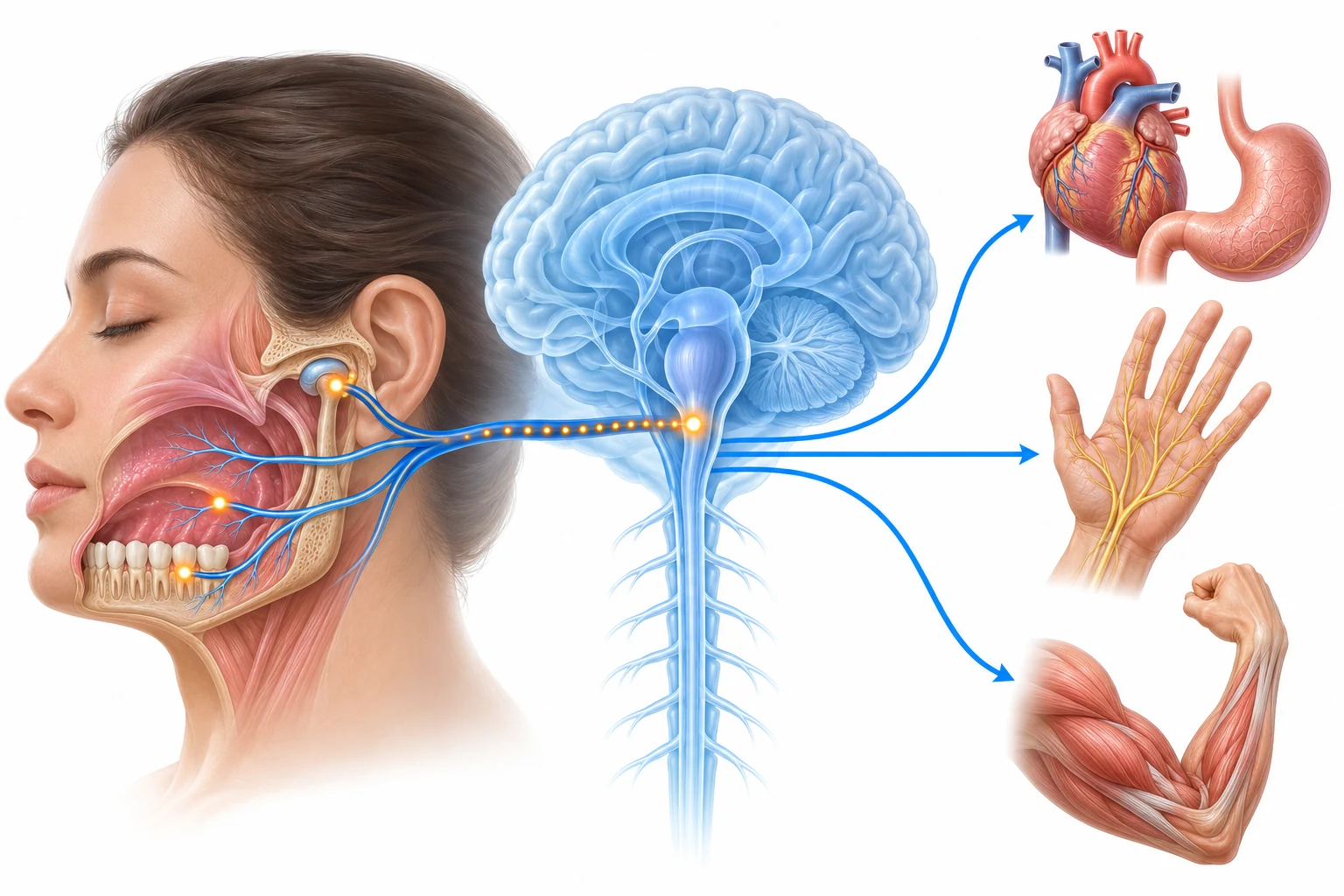
Stimulation of the jaw joint · teeth · oral mucosa→Trigeminal nerve→Central nervous system
Regulation of organ function
Heart rate, breathing, digestion and other
autonomic responses
Processing of pain and sensation
Sensitivity to pain and
the response to incoming sensation
Regulation of muscles and movement
Muscle tension and
the responses that regulate movement
03 · Connections to Other Symptoms
Once more:
why does the jaw joint matter?
It starts at the jaw and continues through the whole body.
Where the two connections beginJaw joint · teeth · gums · tongue
Bone connectionNerve connection
Bone connection
Skull
First cervical vertebra, C1
The spine continuing below it
Nerve connection
Trigeminal nerve sensitizationRepeated harmful stimuli from the teeth, tongue, gums and jaw joint
Effects on the brainstem and central nervous systemEffects on regulation of sensation, the autonomic nerves and the somatic nervous system
01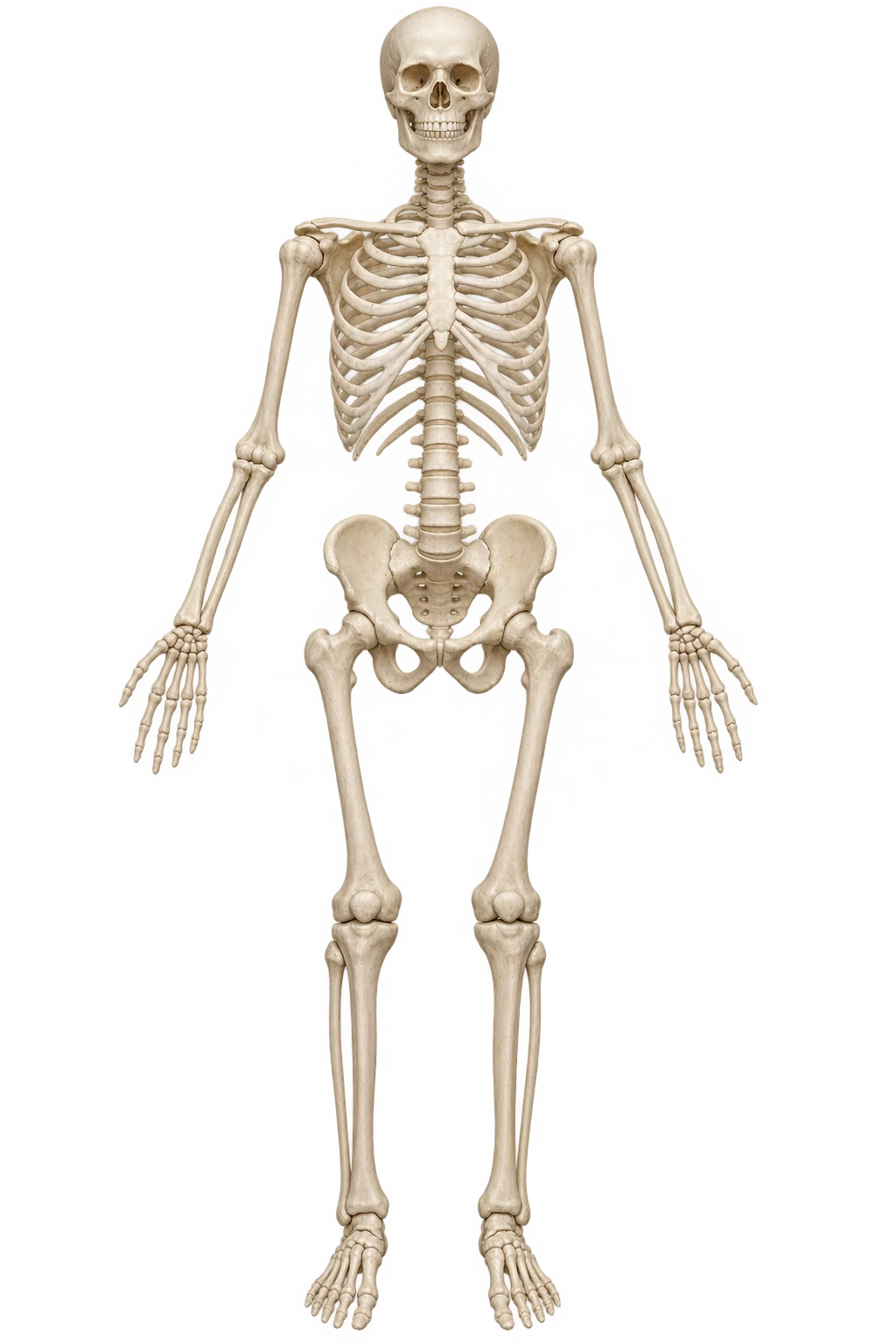
Changes in bone and postureFace · spine · body shape
02
Sensory problemsPain · hearing · vision
03
Problems with organ functionAutonomic nervous system · heart, breathing, digestion
04
Problems with motor functionSomatic nervous system · muscles, movement
Symptoms that can appear with
nervous system and musculoskeletal imbalance associated with dysfunction of the skull and lower jaw
Not every symptom is caused by the jaw joint, but the structural and nerve connections offer a way to look at them together.
01
Changes in bone and posture
Face · spine · body shape
Facial asymmetry (changes in facial shape)
Difference in eye height between the two sides, differences in the size and height of the cheekbones, deviation of the lower jaw, changes in facial outline and overall facial form
Imbalance of posture and body shape
Abnormal spinal curvature (scoliosis, lumbar lordosis, thoracic kyphosis), torticollis (tilted neck), difference in shoulder height, pelvic torsion and asymmetry, leg length difference, forward head posture (military neck)
Growth and developmental problems
Impaired normal physical growth or developmental delay associated with imbalances of the nervous system, posture, airway or musculoskeletal system
02
Sensory problems
Pain · hearing · vision
Head, neck and whole-body pain
Tension-type headache, cervicogenic headache, stiffness at the back of the neck, shoulder tension, pain around the shoulder blades and back, acute and chronic widespread pain, cervical nerve root symptoms (pain or numbness in the arm and hand), sciatica, radiating pain in the leg, symptoms resembling thoracic outlet syndrome (TOS), fibromyalgia-like central pain sensitization, a heavy or congested feeling in the head
Ear and hearing problems
Tinnitus, ear fullness and ear pain, hyperacusis (sensitivity to sound), Eustachian tube dysfunction, autophony (a sense that your own voice or internal body sounds are abnormally loud)
Eye and vision problems
Eye fatigue, blurred or dim vision, redness, glare (light sensitivity), lack of tears, difficulty focusing, intermittent episodes resembling double vision
03
Problems with organ function
Breathing · digestion · autonomic nerves
Ear, nose and throat, voice and respiratory problems
Nasal congestion, allergic rhinitis, snoring, obstructive sleep apnea (OSA), sleep-disordered breathing resembling upper airway resistance syndrome (UARS), hoarseness, voice fatigue, chronic throat tension, shallow chest breathing
Chronic digestive and visceral symptoms
Chronic indigestion, gastroesophageal reflux disease (GERD), diarrhea or constipation, reduced gastrointestinal motility, abdominal discomfort, neurogenic cough-like symptoms related to autonomic pathways
Urinary, reproductive and pelvic problems
Urinary frequency, urgency, nocturia, premenstrual tension and menstrual pain, pelvic floor muscle tension, coccydynia (tailbone pain), sacral or pelvic discomfort
Neuropsychiatric and autonomic dysfunction
Low mood, chronic fatigue, sleep problems (insomnia and poor sleep quality), nervousness, chronic tension, brain fog, fluctuating blood pressure, palpitations, cold hands and feet, orthostatic dizziness or intolerance (POTS-like symptoms), other autonomic symptoms
Endocrine-related or systemic symptoms
Chronic adrenal fatigue, reduced stress resilience or tolerance, circadian rhythm disruption, metabolic and autonomic imbalance associated with dysfunction of the hypothalamic–pituitary–adrenal (HPA) axis
04
Problems with motor function
Jaw movement · muscle response
Jaw joint and orofacial problems
Jaw joint pain and clicking, limited mouth opening, stiffness of the muscles around the jaw, articulation or pronunciation problems, trigeminal neuralgia-like facial pain, difficulty swallowing, a lump-in-the-throat sensation, teeth grinding and clenching during sleep, burning mouth, atypical facial pain / atypical toothache
Nervous system and movement disorders
Orofacial and tardive dyskinesia, tic disorders, tremor, cervical dystonia, spasmodic dysphonia (laryngeal dystonia), blepharospasm, Meige syndrome-like facial spasm, cervicogenic dizziness, accessory nerve-related spasm or dysfunction of the sternocleidomastoid or trapezius
These are symptom and observation items from our consultation materials. This is not a list that establishes the cause of any condition or the effect of jaw joint treatment on it. “Adrenal fatigue” is not an established medical diagnosis, and terms such as “POTS-like” do not mean a diagnosis of that condition.
Treatment principles at a glance