
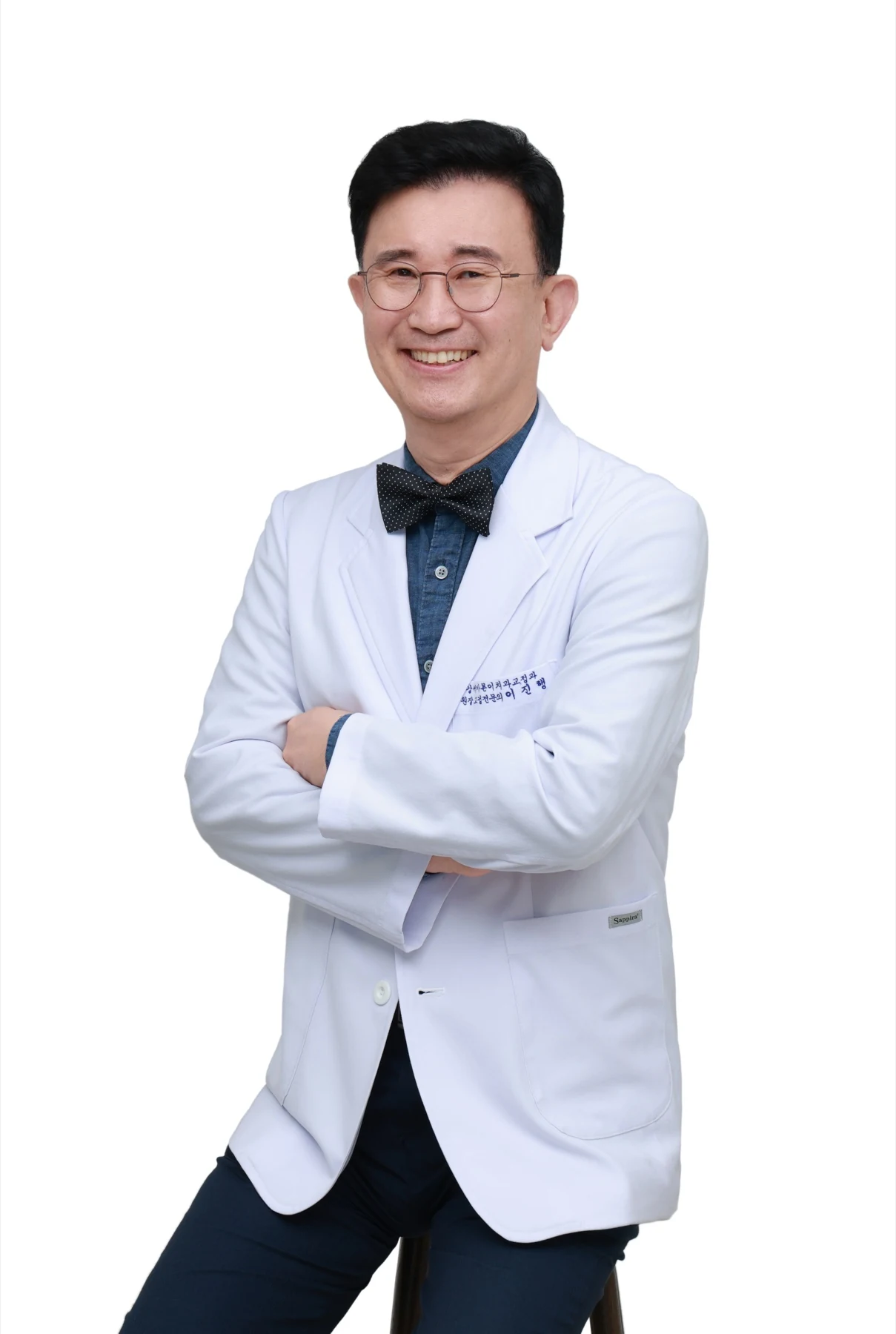
A Message from Dr. Lee
Welcome.
I am Dr. Jinhaeng Lee, director of GSB Orthodontics (Gangseo Barun Dental Clinic).
In orthodontic and jaw joint care, I have found that what matters most is not only whether the teeth are straight or the jaw sits in a good position, but how the teeth actually meet when the mouth moves and what kind of irritation that creates.
At GSB Orthodontics, when we examine the jaw joint we also look closely at the teeth and at sensation inside the mouth.
First, we look at how the jaw, the muscles and the bite move in three dimensions.
We check the jaw joint’s range of motion, the function of the chewing muscles, and how well the molars support the bite. We also look carefully for premature contacts, where one tooth touches before the others, and for anything that irritates the soft tissue inside the mouth. When a functional assessment of the jaw joint and lower jaw is needed, we use an MCB splint made for the individual patient, and throughout treatment we repeatedly check lower jaw movement, muscle response and changes in the bite.
Second, we decide carefully and recommend only the treatment that is needed.
We closely assess sharp tooth edges that repeatedly irritate the soft tissue and bite contacts that are unstable, but not every small difference needs treatment. Irreversible procedures in particular, such as reshaping a tooth, are carried out with care and only when a clear clinical need has been confirmed.
Third, we keep an objective record of every change before and after treatment.
We record the position of the lower jaw, the stability of the bite, chewing muscle function, and changes in the discomfort the patient actually feels. Where needed, we also observe related functional changes such as neck movement or posture, but we do not stretch these observations into claims of a definite treatment effect on conditions elsewhere in the body. We keep to medical principles.
What matters most to us is not attributing every symptom to a single cause, but carefully finding the problem the patient is actually experiencing and addressing it properly.
By looking at the teeth, the jaw joint and the balance of the body together, we hope to help our patients live more comfortably day to day.
Thank you.
GSB Orthodontics (Gangseo Barun Dental Clinic)
Jinhaeng Lee, Director
About Dr. Lee
Dr. Jinhaeng Lee’s background and academic work
More than 40 years of orthodontic and jaw joint practice led Dr. Lee to the study of osteopathy.
He developed the MCB method, which brings an osteopathic perspective into dentistry, and shares his clinical experience and research through published papers and seminars for dentists.
Education and qualifications
- Graduated from Chosun University College of Dentistry
- Master of Dental Science (MDS)
- Orthodontic specialistMinistry of Health and Welfare, Korea · 2018
- Certified orthodontist, Korean Association of OrthodontistsFirst registered 1998
- Certified in Applied Kinesiology (AK)Certification course of the International College of Applied Kinesiology (ICAK) · 2014
- Completed a one-year professional program in osteopathy for licensed clinicians (C.Ost)Institution recognized by the Osteopathic International Alliance (OIA) · Clinic listed by the Korean osteopathic medical association
Societies and organizations
- Full member, Korean Association of OrthodontistsJoined 1982
- Fellow, World Federation of Orthodontists (WFO)2011
- International member, American Association of Orthodontists (AAO)
- Special director, Korean applied kinesiology study group2017
- Editorial board member, VOXCON Dental Pages2020
- Full member, Bareuni Volunteer AssociationOrthodontic support for teenagers from low-income families, among other work · 2012
Osteopathy and cranial training
- Basic course in cranial osteopathy, Korean osteopathy societyCranial Osteopathy Basic Course · 2016
- Asia-Pacific Congress of Osteopathic Medicine (APCOM)Clinical reasoning in osteopathy of the head and neck · 2017
- Hancock CranioSomatic InstituteCompleted the advanced integrated cranial and somatic course (CranioSomatic Therapy) · 2017, 2018
- Specialist course in functional cerebrospinal techniqueLEE’s Functional CerebroSpinal Technique · 2012
Orthodontic and jaw joint training
- Dr. Daniel Subtelny course in orthodontic diagnosis and treatmentCo-hosted by the Korean Association of Orthodontists · 1990
- Multiloop Edgewise Arch-Wire course1991, 1992
- Lawrence F. Andrews FoundationPostgraduate course in Straight Wire Technique · 1993
- Roth/Williams Center for Functional OcclusionClinical training in occlusion and orthodontics · 1997
- Dr. Richard McLaughlin coursesDiagnosis and treatment planning centered on jaw joint problems (2001), Class III treatment (2016)
- Asian TMJ forum · Hokkaido University jaw joint training course2011
- Damon System Symposium (Rome, Italy) · Asian Damon Forum2008, 2011
Publications and inventions
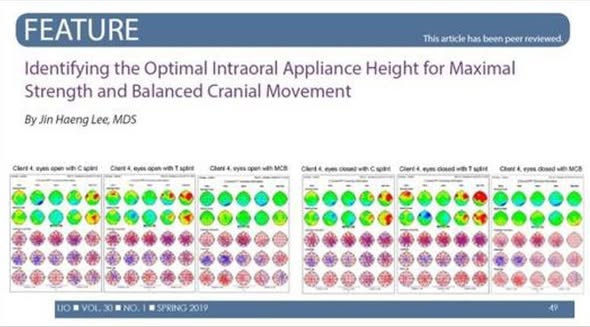
- Developed the MCB technique and the MCB splintMandibular Cranial Balancing
- Invention: adjustable occlusal support appliance for the jaw jointAdjustable Temporomandibular Occlusion Assistance Device · 2017
- Runs MCB clinical seminarsTwo-day intensive course for dentists
Awards and listings
- Marquis Who’s Who in the WorldListed 2017–2018, 2020, 2021
- Albert Nelson Marquis Lifetime Achievement AwardLifetime Achievement Award · 2017–2018
- Marquis Who’s Who Top Doctors2019
- Award related to the World Intellectual Property Organization (WIPO)2015
Sources: Dr. Lee’s licenses and certificates of completion, and the clinic listing of the Korean osteopathic medical association. The papers, seminars and courses listed here describe Dr. Lee’s research and teaching activities and do not guarantee any particular treatment result.
Where assessment begins
We look at jaw position and the bite together
That is why we assess the following four things together.
No single one of them decides the treatment.
- Jaw joint movementWhether the jaw opens and closes along the same path each time
- Chewing muscle functionTension in the masseter and temporalis, and tenderness to pressure
- Molar supportWhether any molar gives less support than it should
- Premature contacts and soft-tissue irritationA tooth that touches 0.01 mm before the others, a sharp edge
Our Approach
Three things we hold to
- 01
Careful diagnosis
We don’t jump straight to making an appliance. We first see how the jaw responds
A splint is not the start of treatment but a tool for precise diagnosis. We check carefully at each step until we find the position where the jaw joint and muscles settle comfortably on their own.
#DiagnosisWithoutOvertreatment
- 02
Preserving teeth
A tooth that has been ground down does not grow back, so this is where we are most careful
We do not add 0.1 mm of height simply because it seems to be missing. We first check how the skull responds when the height is added, and we gently reshape only the small bite contacts that truly need it.
#CheckTheResponseFirst #PreserveNaturalTeeth
- 03
Records and research
We show our work through honest clinical records and research, not overstated promises
We observe and record the body’s responses to changes in the jaw just as they are.
We do not settle for the way we practice today, and we continue our research based on everyday clinical data.
We communicate with patients honestly and only on the basis of objective, demonstrated evidence.#OngoingClinicalResearch #HonestEvidenceBasedCare
You may also want to read
Related conditions and treatments
- Treatment PrinciplesWhy the Jaw Joint MattersWhy jaw position is a starting point for the alignment of the whole body
- Treatment PrinciplesOsteopathyA way of looking at the body’s structure and function together
- TreatmentsMCB Splint TreatmentA custom appliance that guides the jaw to its proper position
We start with an examination, then decide together on only the care you need.