Facial Asymmetry

Are the corners of your mouth at different heights,
and your jawline and face uneven from side to side?

It may be more than the shape of the bones.
It may be a sign that the jaw has shifted to keep teeth from colliding.

When the jaw shifts to one side, it can affect not only the left–right balance of the face but also, in turn, morning facial puffiness and the alignment of the neck, shoulders and spine. Our clinic looks for the small bite interferences and soft-tissue irritation that twist the jaw and, where needed, may combine fine bite adjustment with custom splint treatment.

Book a Consultation ↗
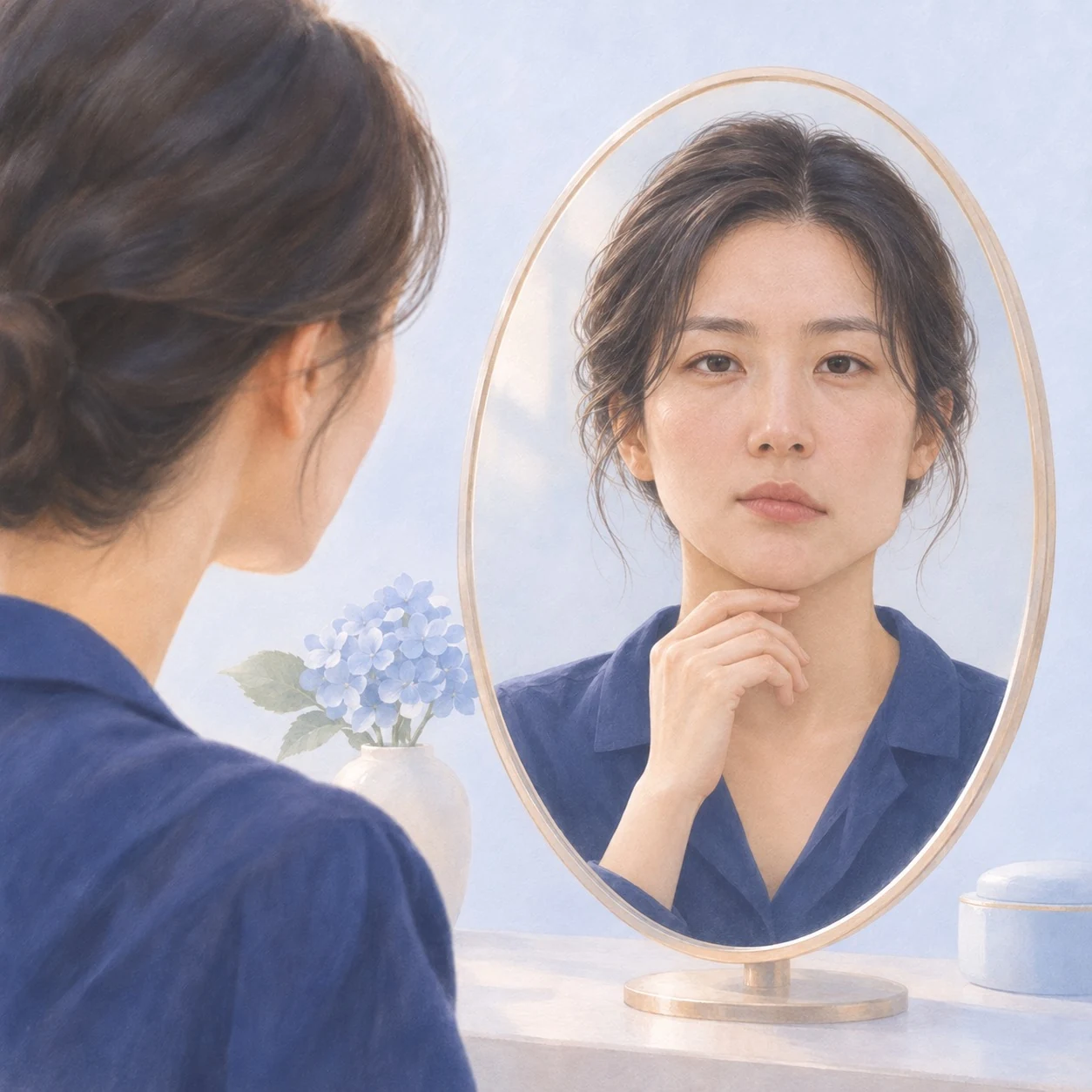
Illustration of a person looking at their face in a mirror

01 · Symptom Check

From uneven mouth corners in photos to a puffy face in the morning,
the balance of the jaw may be shifting

Acquired facial asymmetry develops gradually as imbalances in the jaw joint and the bite accumulate. If you notice changes in the left–right shape of your face together with persistent facial puffiness or a sense that your body is out of alignment, a detailed examination may be needed.

  • Asymmetry of the facial outline and mouth corners

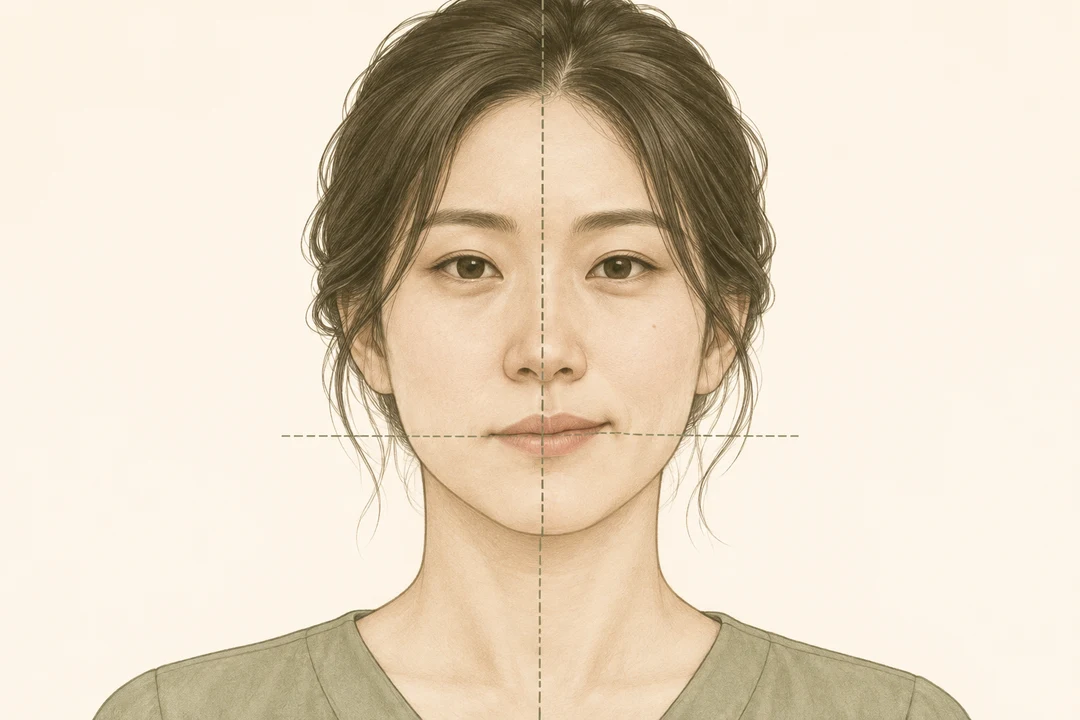
    In a front-facing photo, the eyes, cheekbones and corners of the mouth may sit at different heights on each side, and the midline of the chin may appear turned to one side.

  • Morning facial puffiness and a softer jawline

    Your face may be puffy and your jawline less defined every morning even though you did not eat late at night, and the puffiness may soon return even after gua sha or massage.

  • One-sided marks inside the mouth

    You may have a habit of chewing on one side only, with tooth marks (scalloping) or sores recurring along the edge of the tongue or the inside of the cheek on one side only.

  • Joint noises and a tilt in the body

    When you open your mouth, the jaw may zigzag and make a noise, and your shoulders may feel uneven in height or your pelvis off balance.

Front view of a face showing mouth corners and chin off the vertical and horizontal reference lines
Left–right asymmetry of the mouth corners and jawline
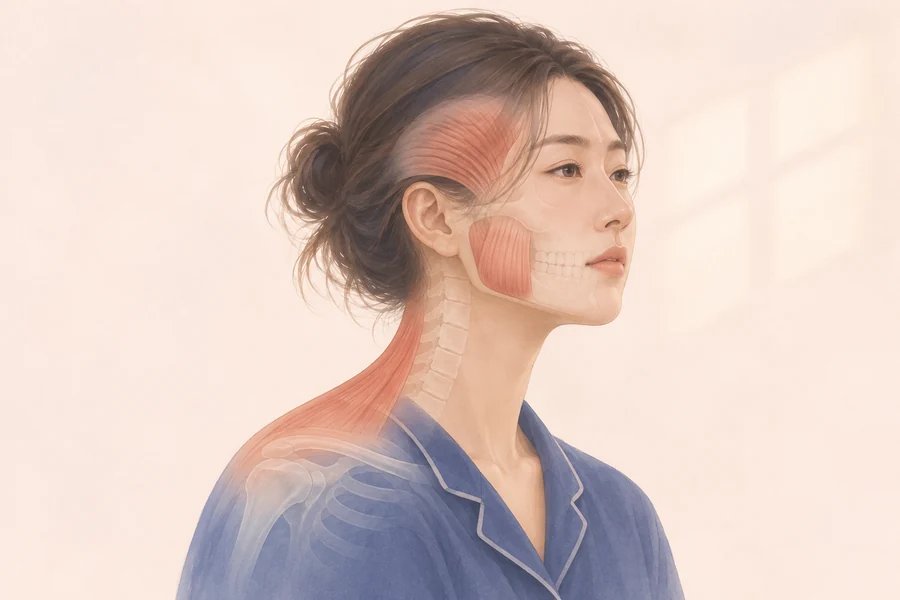
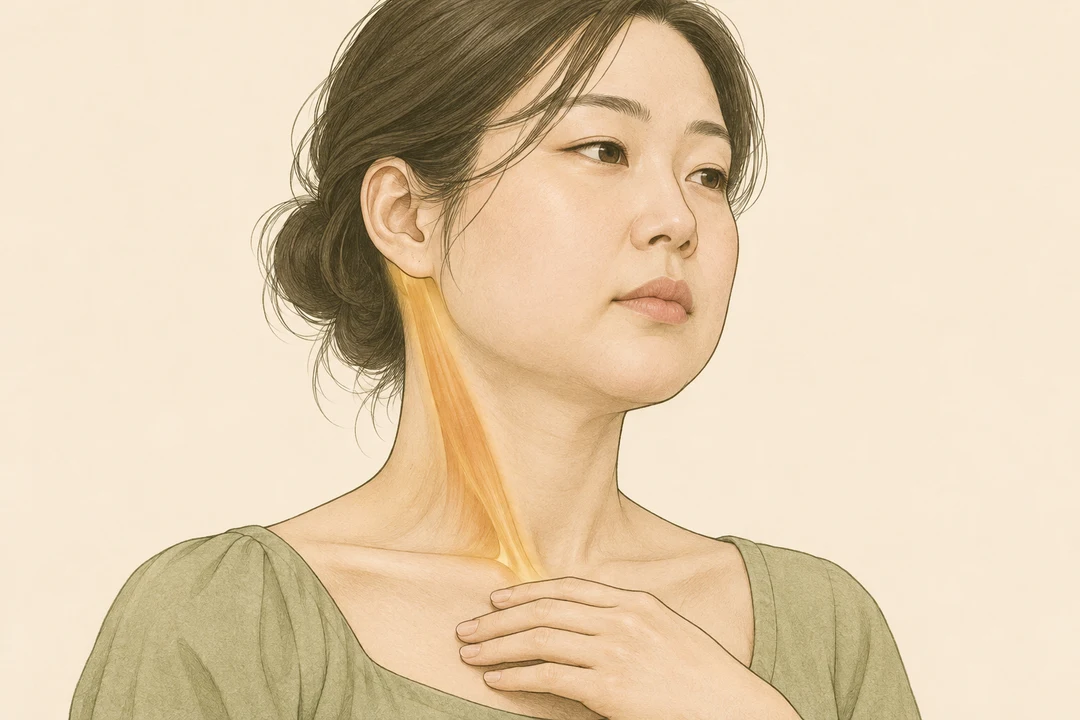
Drawing showing puffiness of the face and jawline and the position of the muscles at the side of the neck
Neck tension and morning facial puffiness

02 · Causes

Tooth contacts and soft-tissue irritation
can affect how the jaw moves

The lower jaw and the jaw joint (TMJ) take part in chewing and closing together with the muscles around the neck and head.
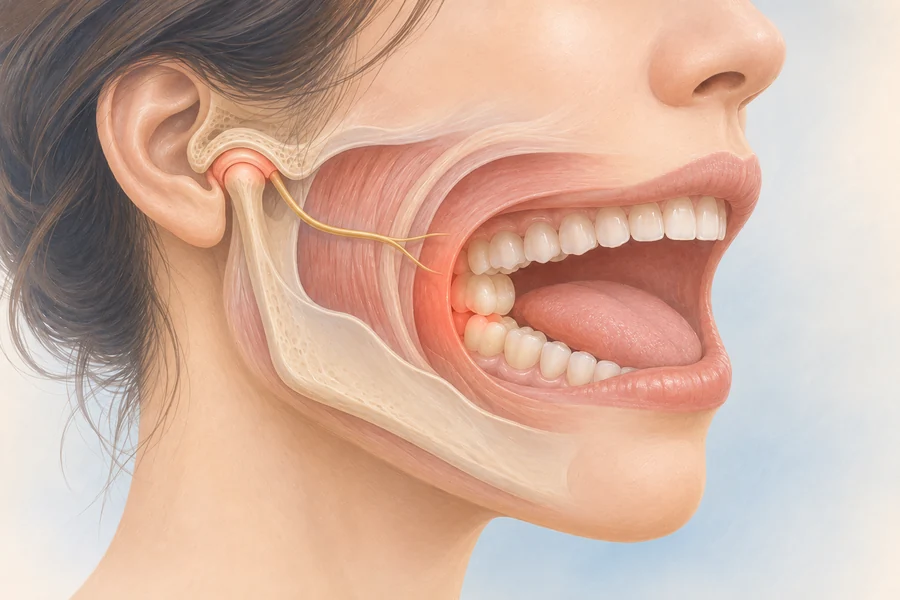
If a tooth touches first or the tongue or the inside of the cheek hurts, we look at whether the path along which the jaw closes changes as it avoids the uncomfortable contact.

  1. Diagram of the jaw showing the molars and the lining of the inside of the cheek

    01A twisted biteAvoiding premature contacts and soft-tissue irritation

    When you close your mouth, you may feel a tooth on one side touch first, or a tooth edge may repeatedly irritate the tongue or the inside of the cheek. Sensation from the teeth and soft tissue is carried by the trigeminal nerve. At your visit, we identify the tooth that touches first and the area of soft-tissue irritation, and look at whether the path of the chin changes as it avoids the uncomfortable contact.

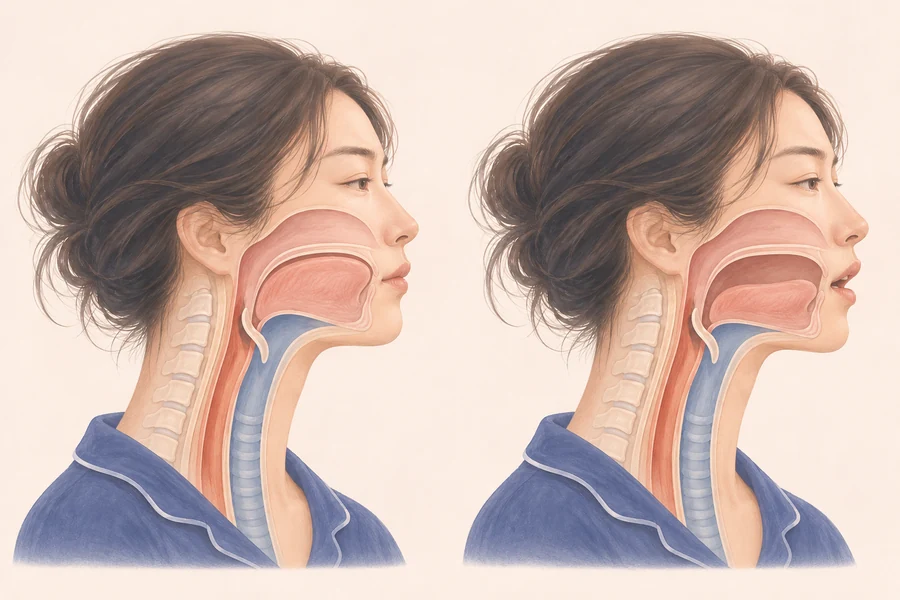
  2. Cross-section diagram comparing tongue position with the mouth closed and open

    02Skeletal growthMouth breathing and tongue position

    When you breathe with your mouth open, the tongue can drop away from the roof of the mouth and rest low. In growing children, associations have been reported between persistent mouth breathing, a narrow upper jaw and a growth pattern in which the lower jaw is directed backward and downward. If nasal congestion or snoring persists, breathing is checked and the growth of the dental arches and jaws is assessed as well.

  3. Diagram marking the sternocleidomastoid running from below the ear to the collarbone

    03Puffiness and outlineNeck muscle tension and facial puffiness

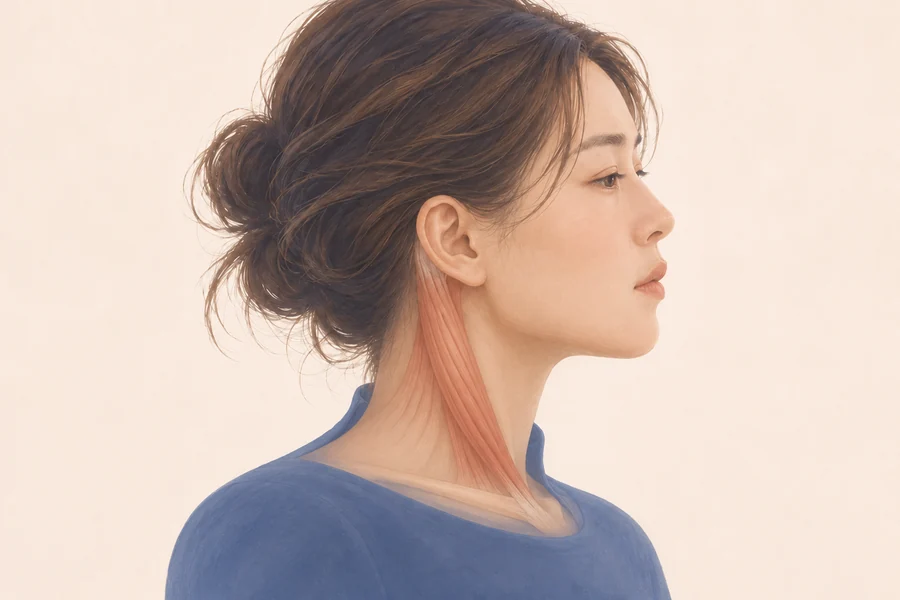
    People who habitually clench their teeth may also feel stiffness around the neck, from under the jaw or below the ear down to the collarbone. We look at the time of day when the face is puffy and at left–right differences, and assess jaw muscle tension and puffiness separately. If one side swells suddenly or the swelling persists, seek medical care to find the cause.

Front view · Diagram1 / 4
Horizontal line Neck turns the other way

  1. One tooth that touches firstA tooth that touches 0.01 mm before the others, a molar that gives less support, a sharp edge that catches the soft tissue.
  2. Trigeminal nerve sensitizationThis stimulus enters the trigeminal nerve, which carries sensation from the face, and builds up every time you chew and swallow.
  3. The jaw shifts to one sideThe lower jaw closes off to one side to avoid the sore spot, and the midlines of the upper and lower teeth begin to drift out of line.
  4. The head tilts and the neck braces the other wayTo keep the eyes level, the upper cervical vertebrae turn the other way and brace.
  5. The body’s compensation becomes fixedThe compensation carries on to the shoulders and pelvis and, with repetition, can become fixed.

A simplified diagram of Dr. Lee’s clinical view. The tilt is exaggerated to make it easier to understand.

03 · Problems That Can Develop

Four kinds of discomfort that can appear with differences in the facial outline

If the jaw moves to one side or left–right differences in the face are noticeable, we look at mouth opening and chewing habits.
We also check whether there is discomfort in the neck and shoulders or facial puffiness.

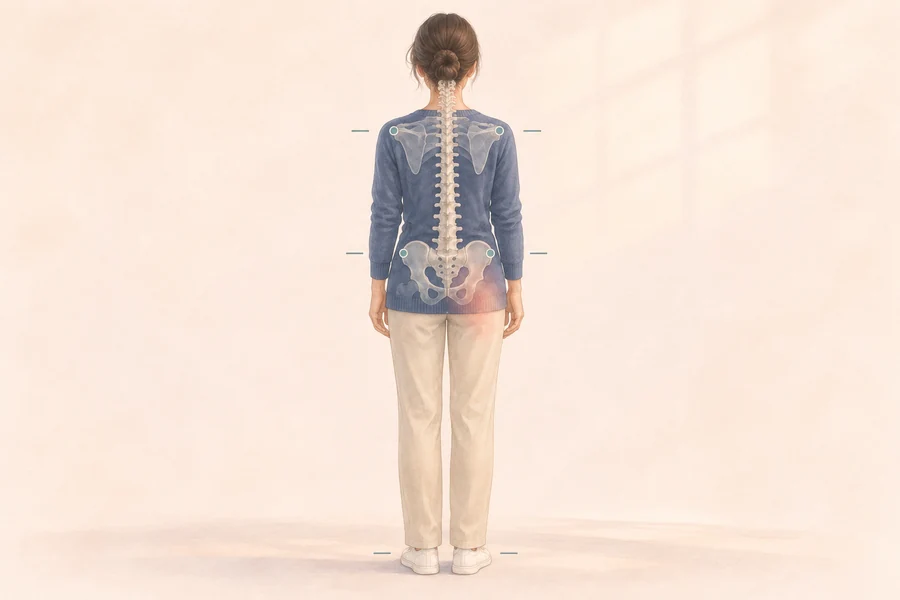
Diagram showing the alignment of the head and neck, both shoulders and the pelvis

① Cervical movement and alignment of the spine and pelvis

If your jaw moves differently on the left and right and your neck and shoulders are also uncomfortable, we look at how far you can turn your head and at the height of both shoulders. If alignment differences in the spine or pelvis persist, or the discomfort continues, those areas are assessed separately.
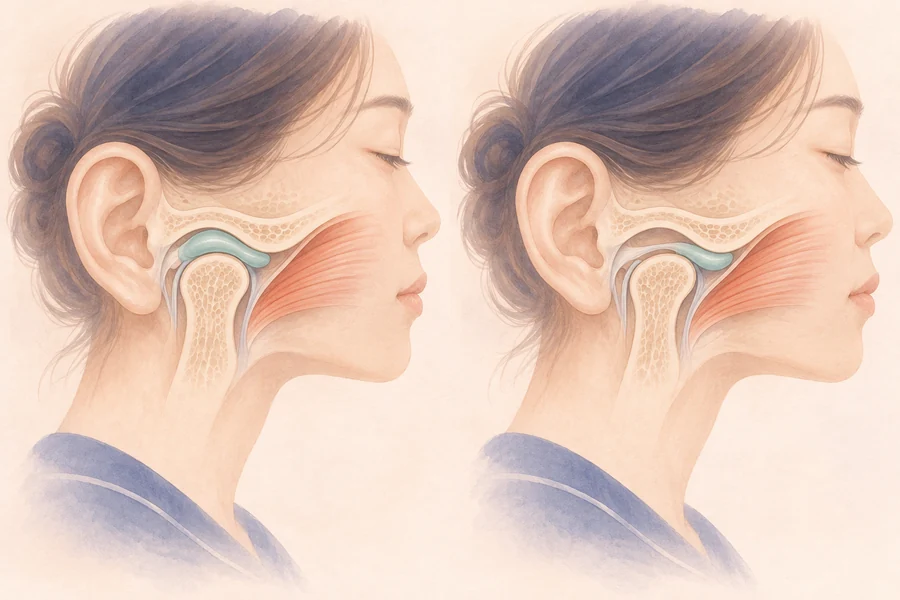
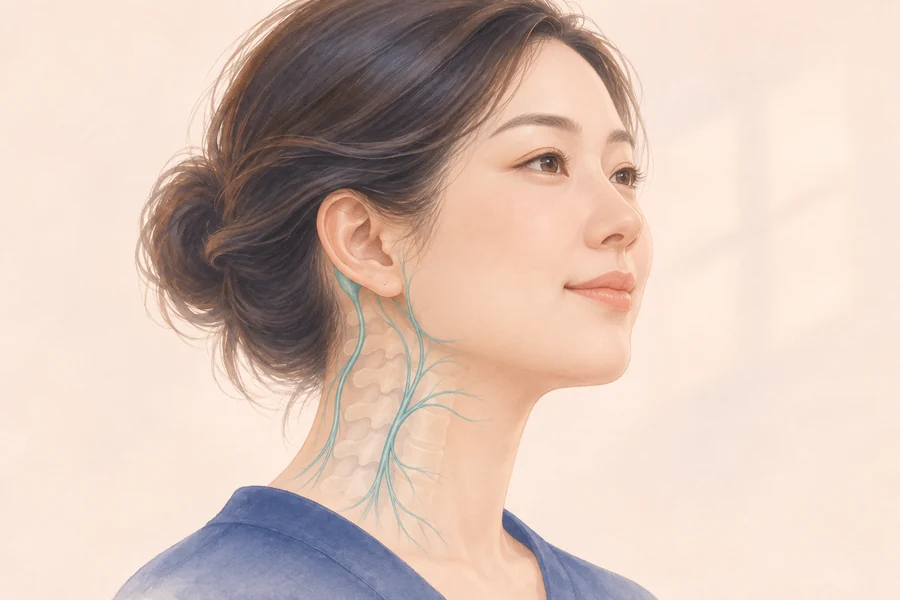
Diagram comparing the positions of both jaw joints and their articular discs

② One-sided jaw joint disc problems and limited mouth opening

When you open your mouth, the jaw may drift or catch to one side, and the range of opening may decrease along with pain. At your visit, we check the path of the jaw and left–right differences in the joints and, where needed, assess the position of the articular disc and the condition of the joint.

Diagram showing the lymphatic pathways from the lower face and below the ear down the neck

③ Recurring facial puffiness and changes in the jawline

If your face is repeatedly puffy, notice when it starts, whether the two sides differ and how long it lasts. The causes vary, including inflammation of the teeth or gums and allergies, so if swelling on one side appears suddenly or persists, have it checked by a clinician.

Diagram showing the masseter and temporalis and the trapezius of the neck and shoulders

④ One-sided development of the chewing muscles and headache, neck and shoulder pain

When the jawline is more prominent on one side, we look at the size and tension of the chewing muscles on each side together with chewing habits. If temple pain or stiffness in the back of the neck and shoulders overlaps, we check whether the symptoms change when you move your jaw or clench your teeth. Recurring headaches can be assessed separately.

04 · Limits of Conventional Approaches

Before orthodontics or massage,
we check jaw position and the cause of the facial asymmetry

Before moving teeth, we check the path along which the jaw closes and how the teeth meet.
If facial puffiness or discomfort in the neck or pelvis is also present, we assess each symptom on its own terms.

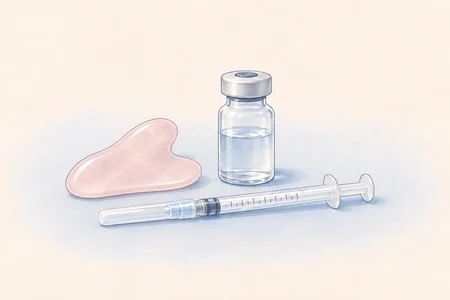
Limits of meridian or gua sha massage and contouring procedures

Illustration of a gua sha tool and a syringe

Massage or contouring procedures can make the appearance or puffiness look different for a time. If you have discomfort when closing your jaw, persistent facial asymmetry or recurring puffiness, we identify what each stems from and decide how to manage it.

Limits of manual therapy, Chuna or pelvic correction alone

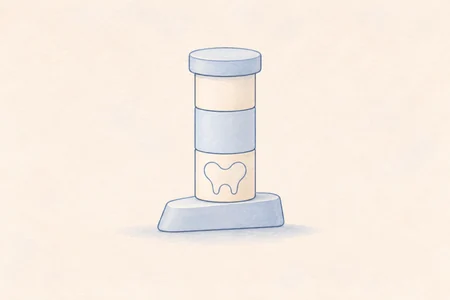
Illustration of a tilted base and column

Manual therapy, Chuna (Korean manual therapy) or exercise can, depending on the diagnosis, help manage discomfort in the neck, lower back and pelvis. If your jaw moves to one side or chewing is uncomfortable, the jaw joint and the bite are assessed separately at a dental clinic.

05 · Treatment at Our Clinic

Two treatment plans to fit your visit schedule

We assess where the teeth meet and how the jaw moves.
We choose an appliance based on those findings and on whether long-term visits are possible, and may combine it with fine bite adjustment as needed.

If long-term treatment is possible

Custom MCB Splint

+ Fine Bite Adjustment

MCB-H · For in-clinic treatment
MCB-L · For sleep

We make an MCB splint to match your jaw position and tooth contacts. At regular visits, we check jaw movement and changes in the bite after you wear it and continue with any adjustments needed.

More about custom MCB treatment ↗

If long-term treatment is difficult right now

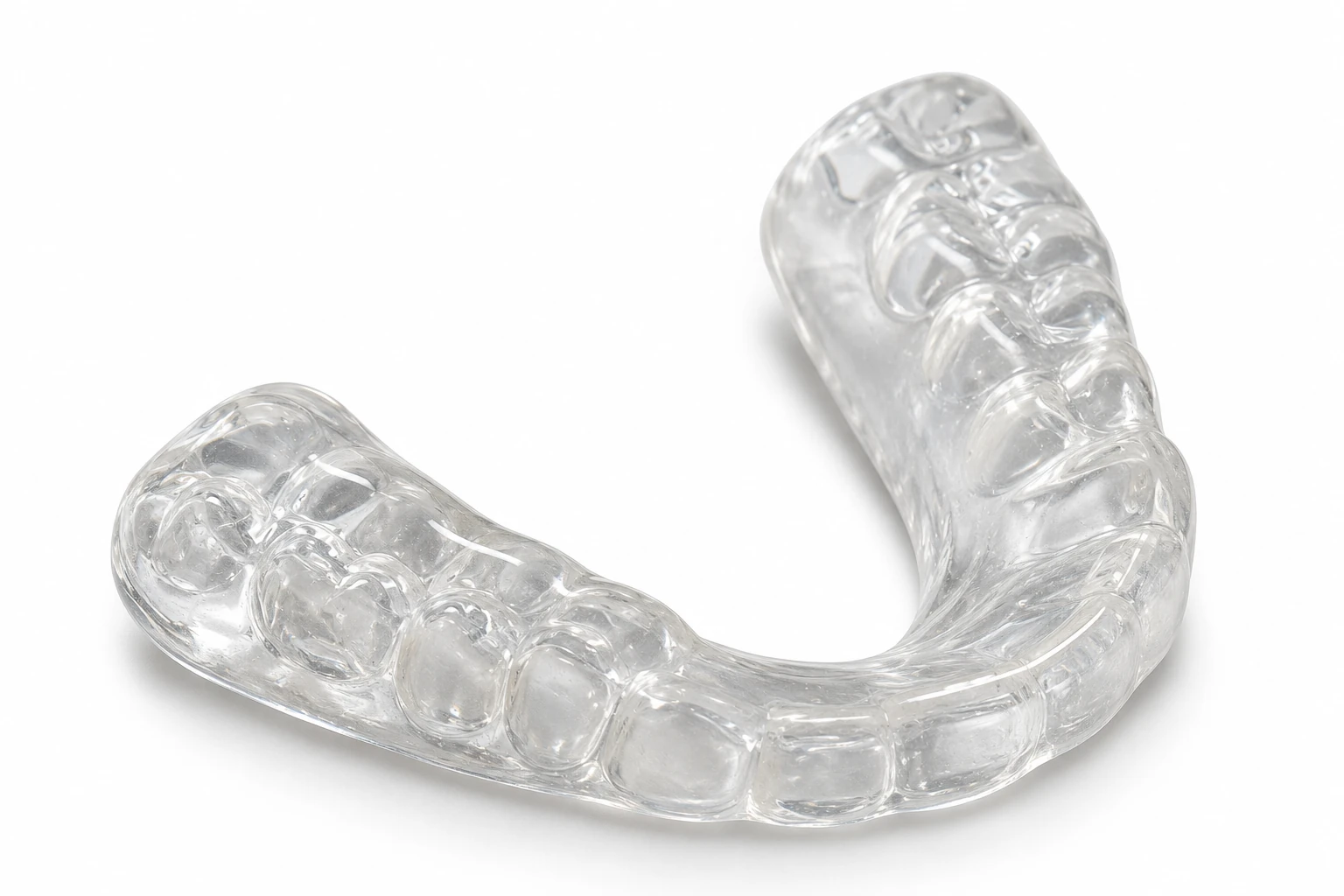
Thermo Splint

+ Fine Bite Adjustment

Clear thermoplastic Thermo splint

We make a thermoplastic Thermo splint to fit the shape of your teeth. We explain how long to wear it and what to watch for during use, and set the next checkup around your availability.

More about the Thermo splint ↗

06 · Everyday Habits

Everyday habits that support facial symmetry and lymphatic circulation

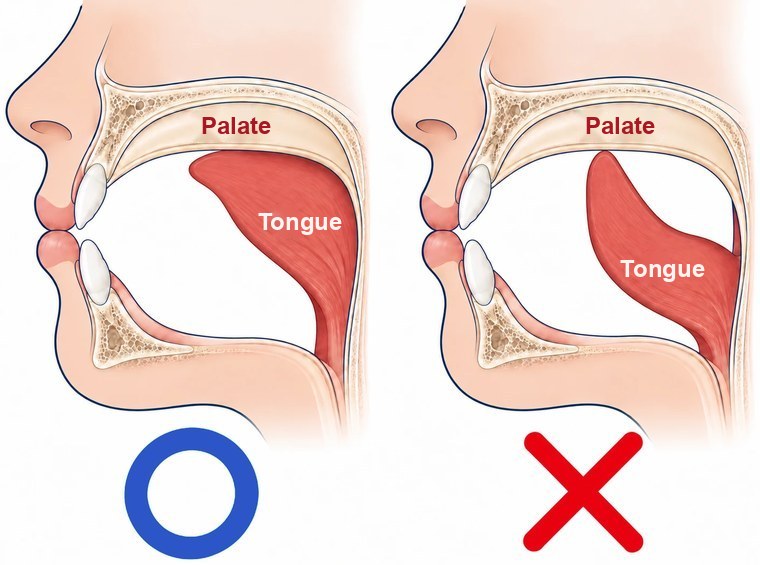
  1. Drawing comparing the tongue touching the front of the roof of the mouth and the tongue curled back

    Rest your whole tongue broadly against the roof of your mouth and breathe through your nose

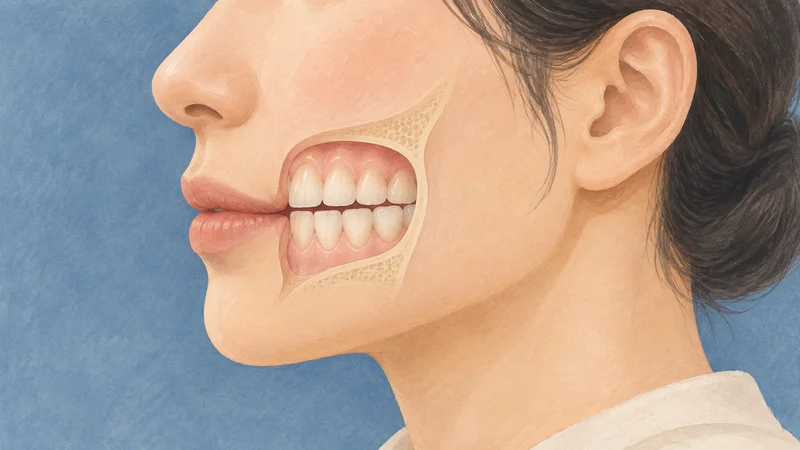
  2. A relaxed jaw with the upper and lower teeth slightly apart

    Chew evenly on both sides and keep your upper and lower teeth apart

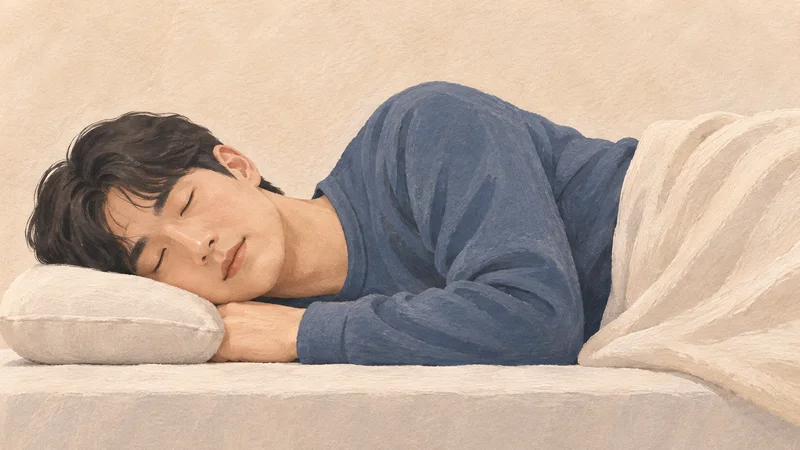
  3. A pillow comfortably supporting the head and neck when lying on one side

    Avoid one-sided pressure such as resting your chin on your hand or sleeping face down on one side

  4. A warm towel resting lightly around the jaw in front of the ear

    Help circulation with a warm compress on the jaw and sternocleidomastoid before bed

Book a Consultation Call Us +82-2-3661-2211