
01 · Three-Dimensional Position of the Lower Jaw
Fine adjustments on a micron scale
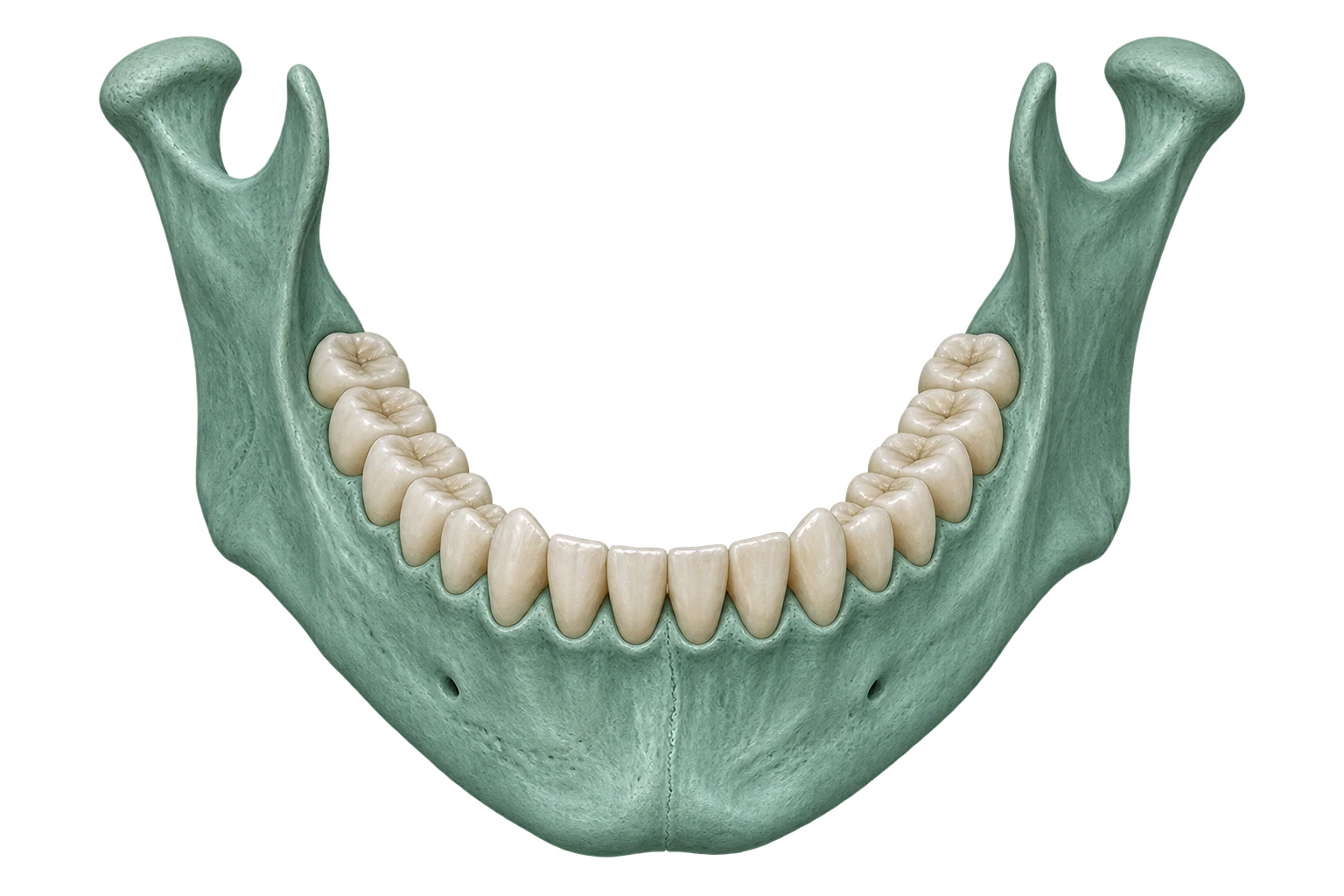
Treatment Principles · 03 Custom MCB Splint
An intraoral appliance designed with
the jaw joint and lower jaw function in mind
“MCB splint” is the name GSB Orthodontics uses for its jaw joint–related intraoral appliance and approach to care.
We assess the condition of the jaw joint, lower jaw movement, chewing muscle function and how the teeth meet as a whole, and use the appliance where needed.
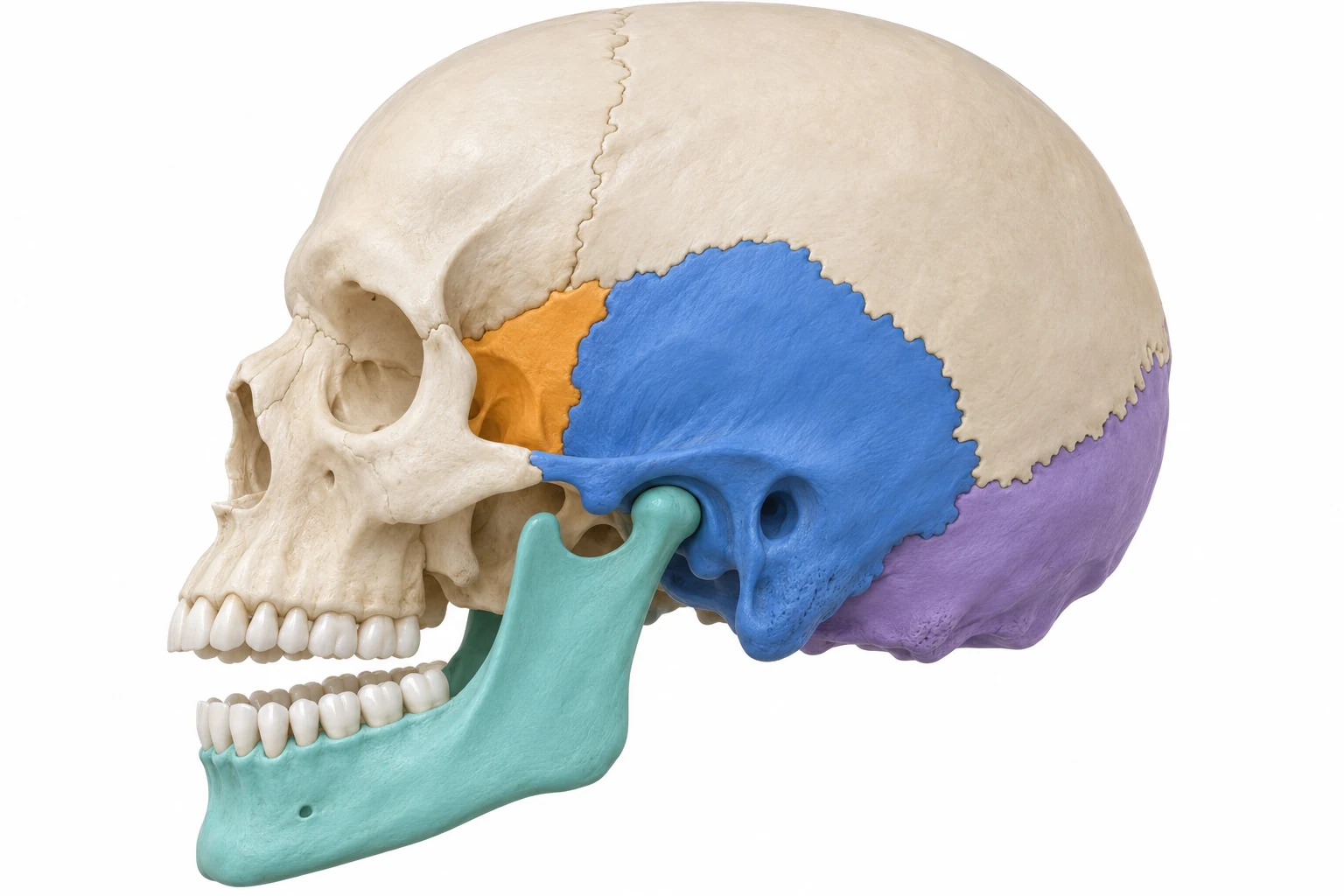
MCB · Mandibular Cranial Balancing
We look at the position of the lower jaw and the balance of the skull together.
MandibularUsing the lower jaw
Cranialto bring balance
Balancingto the skull
01What is different
Why an orthodontic specialist with 40 years of practice talks about the lower jaw. Looking at the same bite, what differs is how far you look.
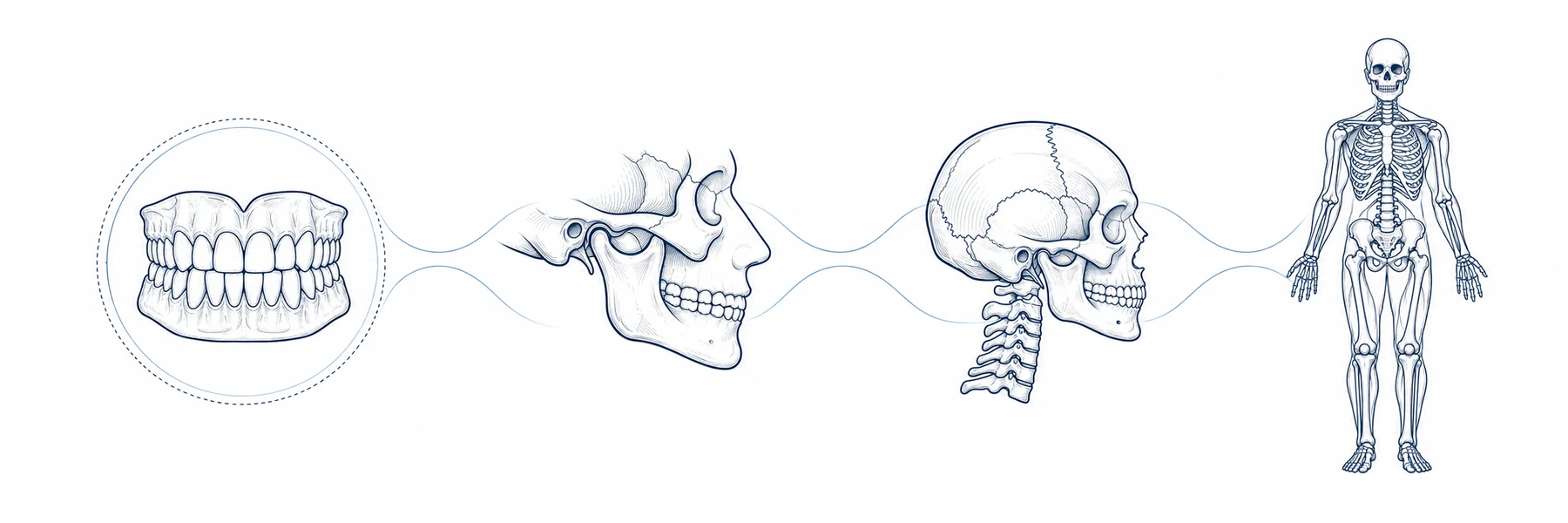
TreesFour reference positions in conventional dental occlusion
All four are defined within the mouth (teeth, joint, muscle).
ForestOne more question MCB asks
“Where does the lower jaw need to be
for the whole skull and the body to find balance?”
On top of the references within the mouth, we also look at the movement of the skull and the symmetry of the body.
02What the MCB position is
The position where the teeth fit most comfortably now may be one created by a habit of the jaw closing off to one side to avoid a tooth that touches first.
Every time the teeth touch, the same twisting tension may build up again.
It is a “physiological neutral point” that differs from person to person. Dr. Lee finds it for each patient individually, using measuring paper and his hands.
03How it is found
Dr. Lee changes the position of the lower jaw in very small steps while feeling the movement of the skull with his hands.
He looks for the position where the rhythm feels even and natural, and uses it as the reference for making the custom splint.
He adjusts the position of the lower jaw in small steps and checks the craniosacral rhythm.This is the process Dr. Lee uses in the clinic to find the jaw position.
What is the craniosacral rhythm?Why the lower jaw acts as a lever
In Dr. Lee’s view, misalignment of the skull pulls on the jaw joint and creates a tiny gap where the upper and lower teeth do not fully meet.
He therefore uses 0.1 mm measuring paper to fine-tune the height of support between the teeth while looking for the jaw position at which the movement of the skull feels even.
When the skull is out of alignment, a gap opens between the teeth
The force of the teeth touching travels up to the base of the skull
Skull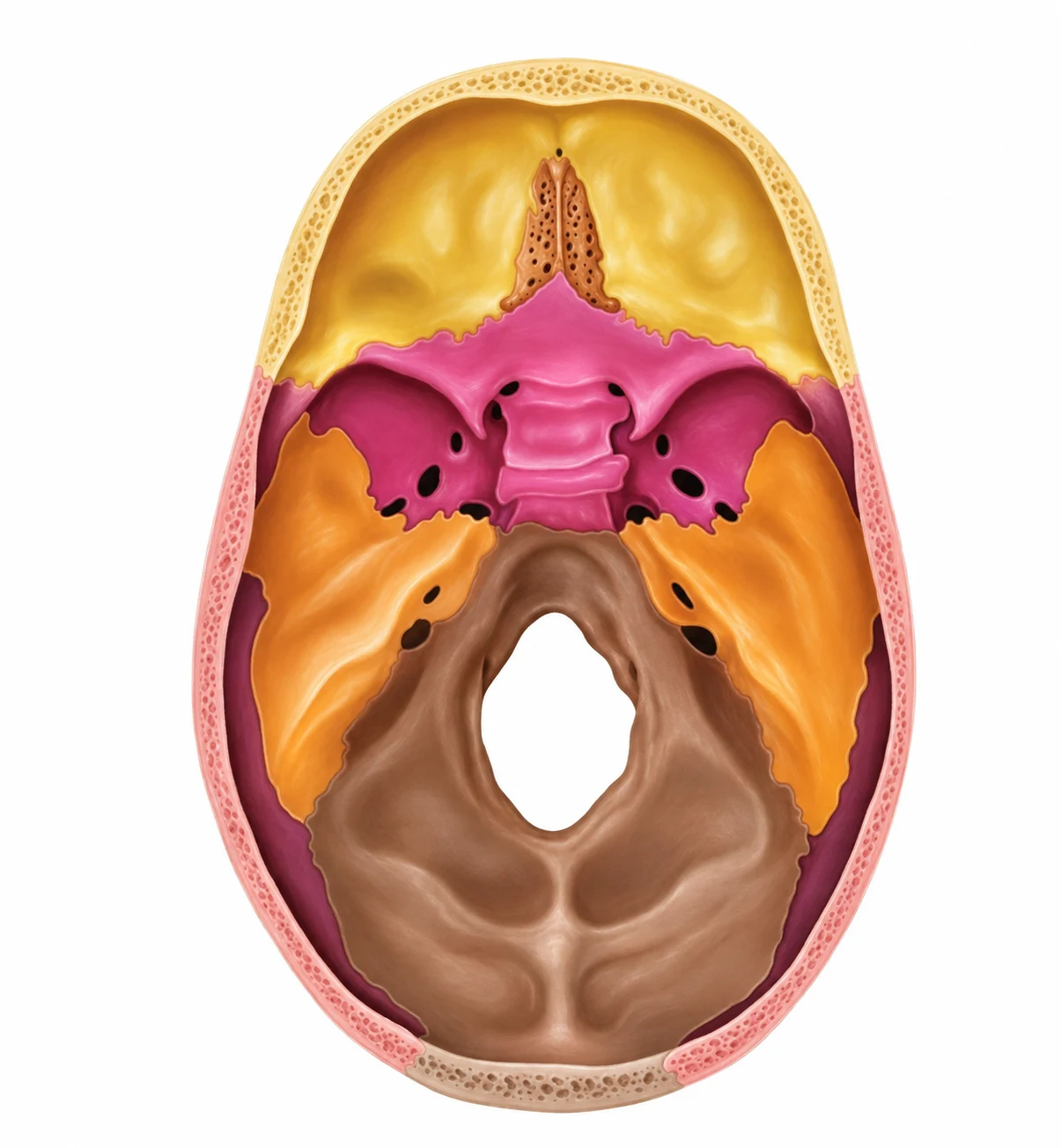 Base of the skull
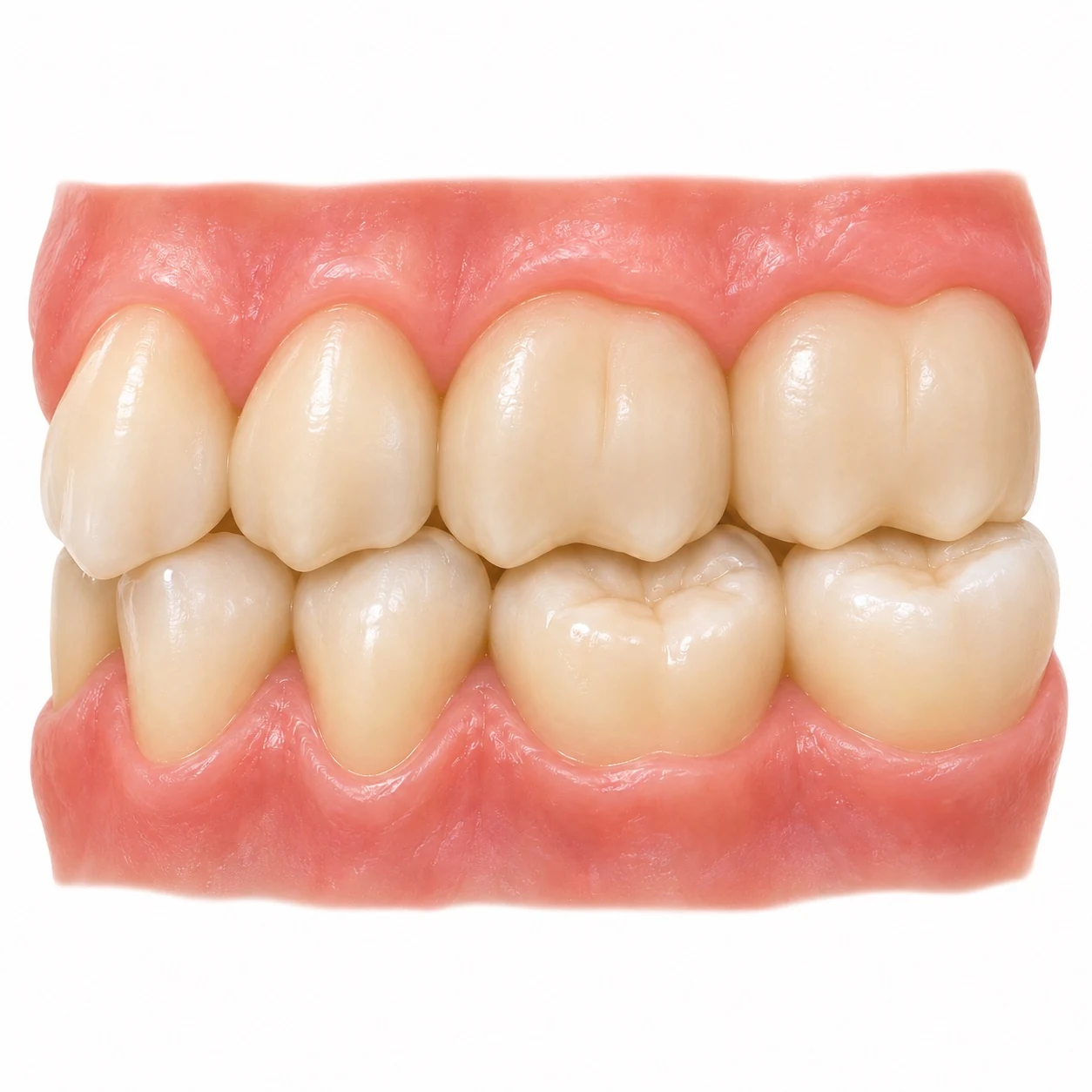 Upper and lower teeth
04When the teeth touch in that position
The pathway by which sensation regulates the muscles through the nerves is grounded in anatomy and physiology; the changes seen in the MCB position are Dr. Lee’s observations. The degree of change varies from person to person.

“The aim of MCB is to find a position where the lower jaw is comfortable
and help the body become accustomed to it.”
Treatment principles at a glance