
Sleep Apnea · Snoring

Does it keep coming back
even after weight loss or surgery?

It may not be a problem of the uvula or the nose.
It may be a signal from a lower jaw and tongue base that have been pushed back.

When the airway narrows during sleep, it can lead to chronic fatigue and morning headaches and can also put a strain on blood vessel health throughout the body. Our clinic looks for the small bite interferences and soft-tissue irritation that push the lower jaw back and, where needed, may combine fine bite adjustment with custom splint treatment.

Book a Consultation ↗
Illustration of a morning when you are still tired after sleeping

01 · Symptom Check

Does your head feel heavy even after sleep,
and is it hard to take a deep breath during the day?

Snoring and sleep apnea do not stop at blocking the airway during sleep; they can lead to a feeling of breathlessness during the day (air hunger) and chronic fatigue. If any of the items below apply to you, it is worth having the structure of the jaw joint and the bite checked.

  • Abnormal breathing during sleep

    Heavy snoring may continue every night, or your breathing may repeatedly stop with a choking sound during sleep and then resume with a gasp.

  • Feeling unwell right after waking

    When you get up in the morning, your mouth may be parched and your head may feel heavy or you may have a splitting headache.

  • Daytime breathlessness (air hunger)

    Even though lung and heart tests are normal, you may be unable to breathe all the way in, and may sigh or yawn often.

  • Features of the mouth and posture

    You may feel a particular spot touch first when your teeth come together, and there may be tooth marks (scalloping) along the edge of the tongue or an accompanying forward head posture.

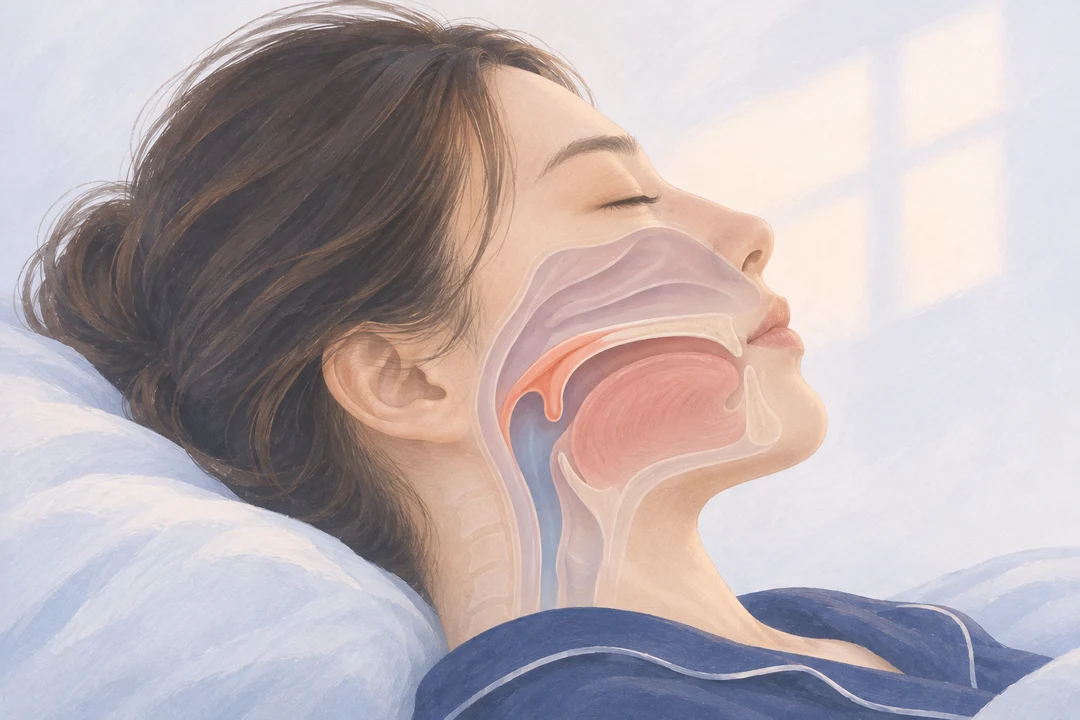
Illustration of a sleeping person in profile with a narrowed airway
Snoring and apnea during sleep
A person at a desk with a hand on their chest, catching their breath
Daytime breathlessness

02 · Causes

It may not be the nose or the uvula, but a pushed-back lower jaw
and tongue base, that blocks the airway

The air passage in the throat that runs from the nose to the lungs (the upper airway) is a tunnel of soft tissue with no rigid bone. For this airway to stay open without collapsing, the support of the lower jaw, which draws the airway forward, is important.

  1. Diagram of the narrowed airway behind the lower jaw and tongue base

    During sleepA lower jaw that sits back and a 70 g tongue base blocking the airway

    The muscle that pulls the tongue forward (the genioglossus) is attached to the inside of the lower jaw bone. When you fall asleep with the lower jaw pushed back and the muscles relax, the base of the tongue, which weighs about 60–70 g, can sink under gravity toward the back wall of the throat. When the airway narrows, the tissue vibrates and produces snoring, and when it is completely blocked, sleep apnea can occur.

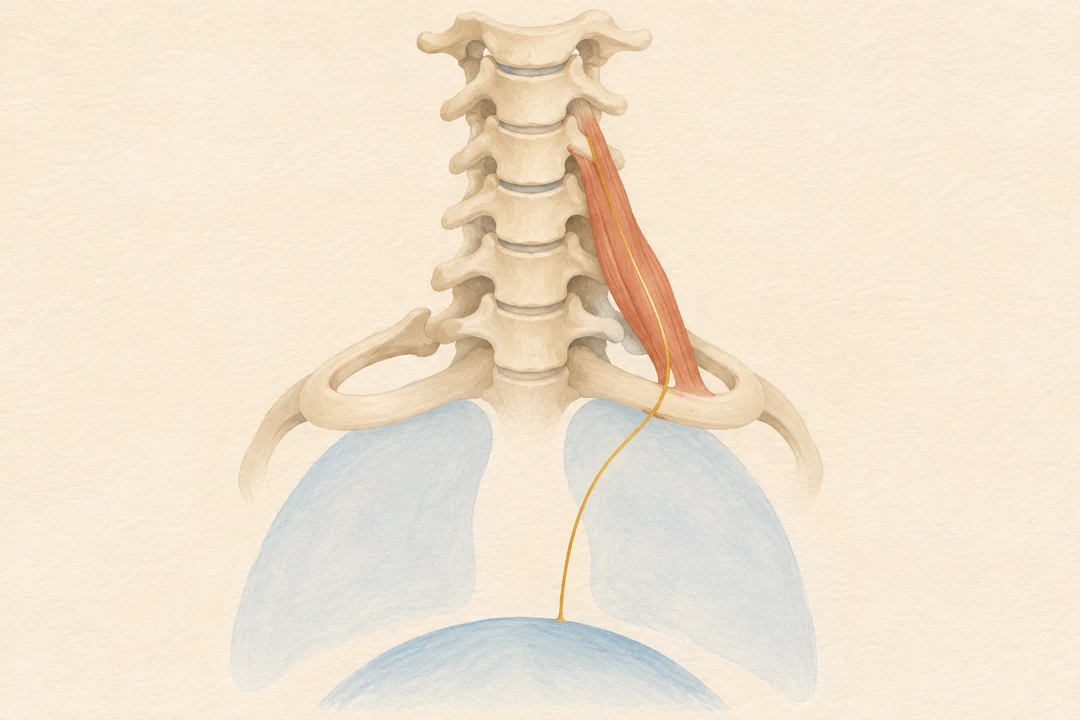
  2. Drawing showing the anterior scalene muscle and the course of the phrenic nerve

    While awakeCompensatory forward head posture and phrenic nerve compression

    If you keep pushing your head forward to open an airway narrowed by a jaw that sits back, and this posture becomes fixed, the anterior scalene muscle at the front of the neck can stiffen to bear the weight of the head. The phrenic nerve (C3–C5), which runs over the front surface of the anterior scalene, may then be compressed, and this can produce a feeling of breathlessness, as if the breath does not go all the way down to the base of the lungs, even when there is no disease in the lungs themselves.

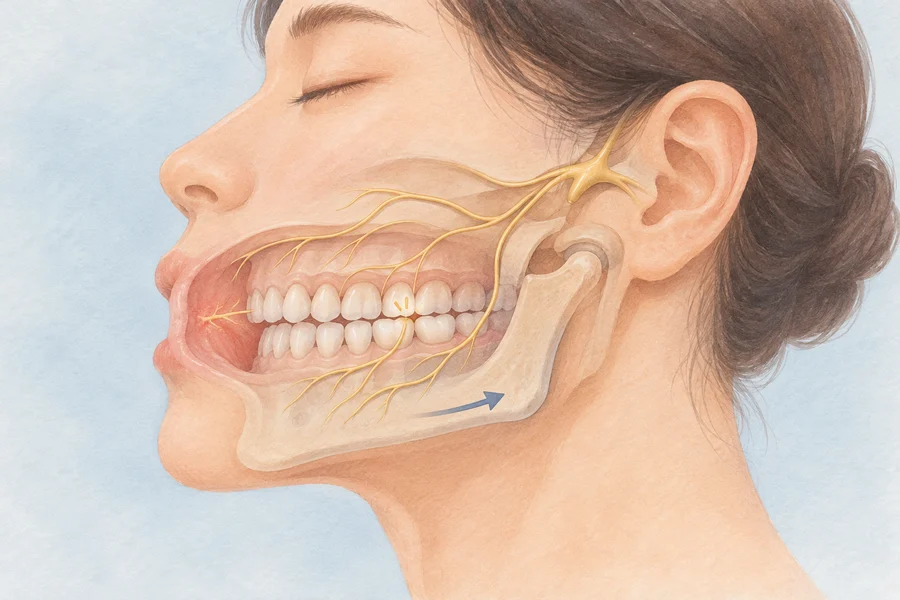
  3. Diagram showing tooth contact, sensory signals from the soft tissue and lower jaw position together

    Day and nightTiny premature contacts and soft-tissue irritation

    When tiny collisions between the teeth, on the scale of a single hair’s thickness (0.01 mm), or a tooth edge worn sharp keep irritating the tongue and cheek lining, the trigeminal nerve, which carries sensation, can become sensitive. To avoid this uncomfortable stimulus, the brain may unconsciously pull the lower jaw up and back, which can in turn set up a vicious cycle in which the tongue base presses on the airway and the neck muscles stiffen.

03 · Problems That Can Develop

Lack of oxygen and strained breathing during sleep
can affect health throughout the body

If the airway is narrowed all night and the brain and heart do not get enough oxygen, it can go beyond simple tiredness and set off a chain of problems in overall health.

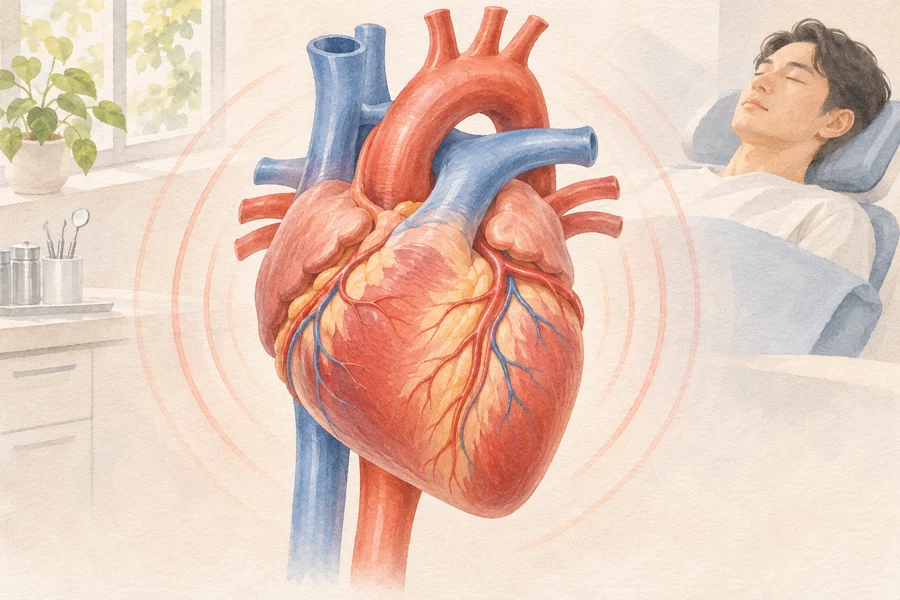
Diagram showing the heart and major blood vessels

① Increased risk of cardiovascular and metabolic disease

Repeated apneas and drops in oxygen saturation during sleep can overstimulate the sympathetic nervous system and raise the risk of vascular and metabolic conditions throughout the body, such as high blood pressure, arrhythmia, heart attack, stroke and diabetes.

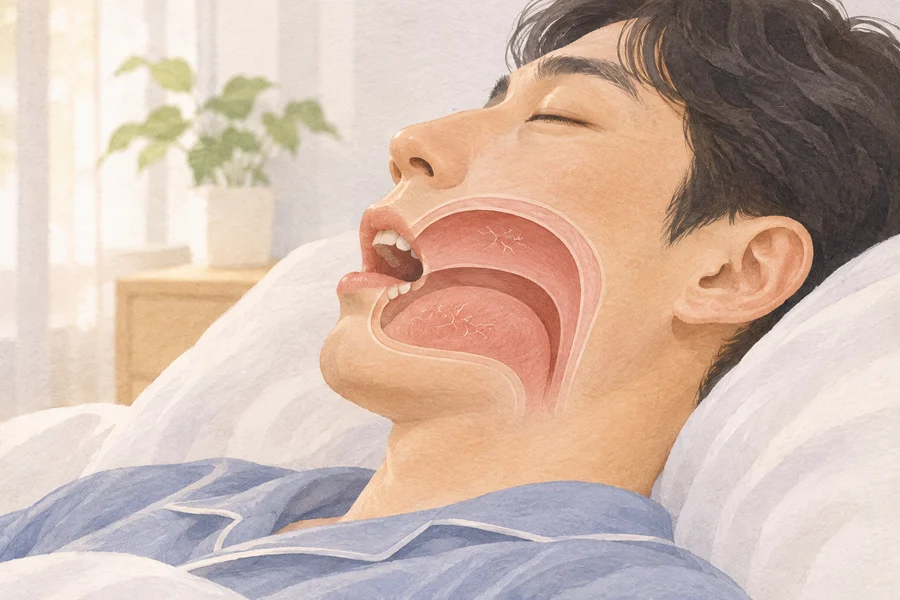
Illustration of a person finding it hard to concentrate during the day because of fatigue

② Chronic fatigue and brain fog (poor concentration)

When the brain is briefly aroused throughout the night and cannot reach the deep stages of sleep, overwhelming daytime sleepiness and poorer memory and concentration can follow.

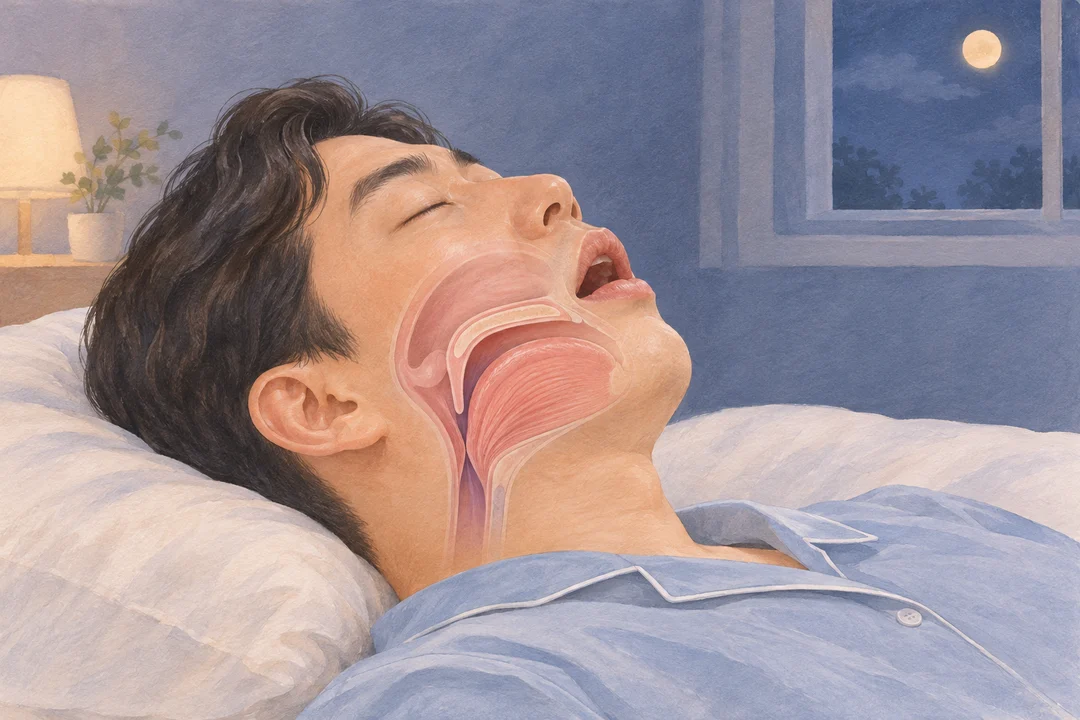
A person sleeping with their mouth open and a cross-section of the mouth

③ Dry mouth and a vicious cycle of mouth breathing

As the mouth opens during sleep in order to breathe through a narrowed airway, saliva dries up and bacteria multiply more easily, which can raise the risk of gum disease and tooth decay.

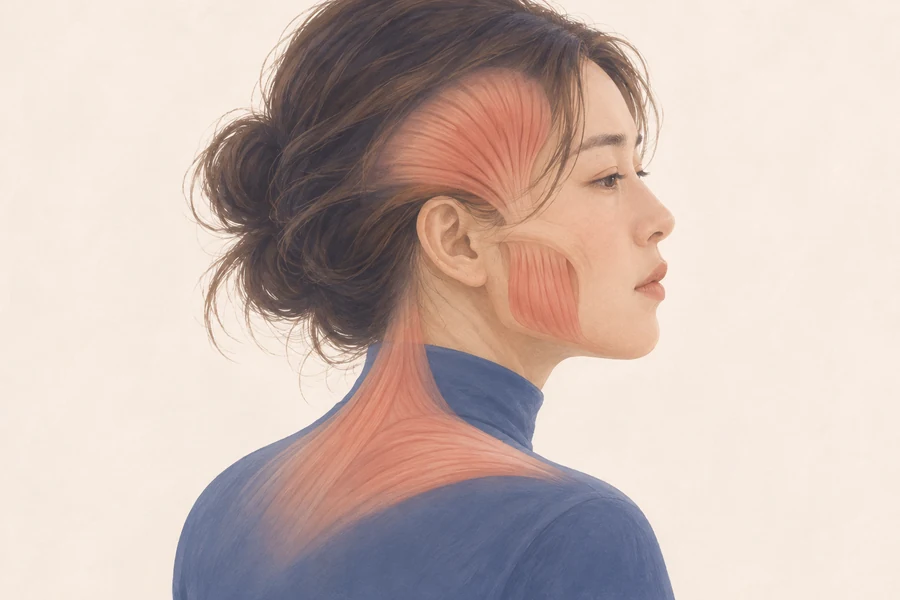
Positions of the muscles of the jaw and temple, neck and shoulders

④ Neck and shoulder pain and chronic headache

A forward head posture adopted to open the airway, together with accumulated overload of the muscles around the jaw and neck (masseter, temporalis, trapezius and anterior scalene), can make unexplained migraines and shoulder stiffness chronic.

About teeth grinding and clenching ↗

04 · Limits of Conventional Approaches

Even after weight loss or removal of the uvula, the airway can narrow again if the position of the jaw stays the same

Temporary relief or an assistive device may help for a while, but the structural cause, a lower jaw bone that sits back so that the tongue base presses on the airway, can remain.

Limits of weight loss and uvula or nasal surgery

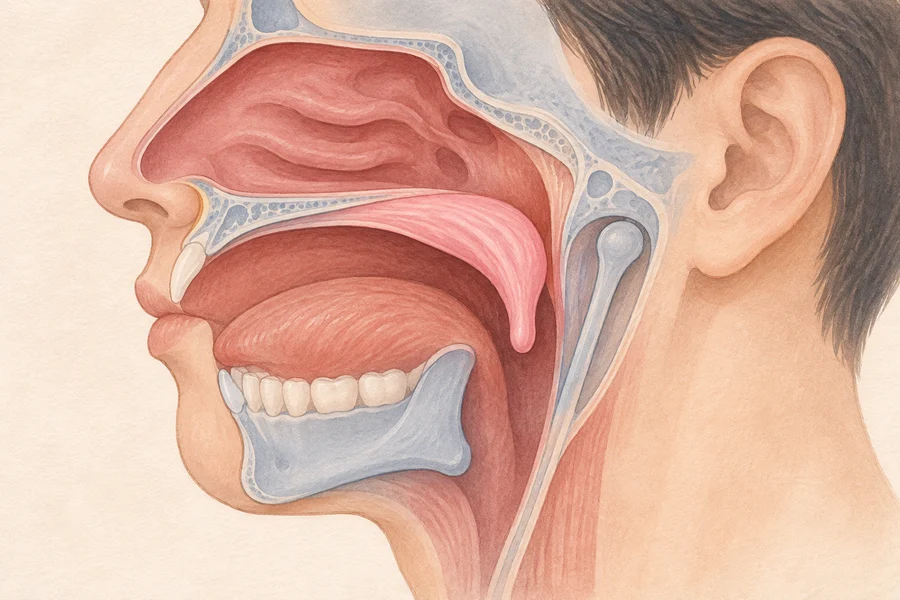
Illustration showing the positions of the nasal cavity, uvula and lower jaw

Obesity is the cause in some cases, but in people with a slim build, or even after weight loss and partial removal of soft tissue from the uvula or nasal passages, the airway can narrow again over time if the lower jaw bone and tongue base, which support the front wall of the airway, continue to be pulled backward.

Practical limits of CPAP

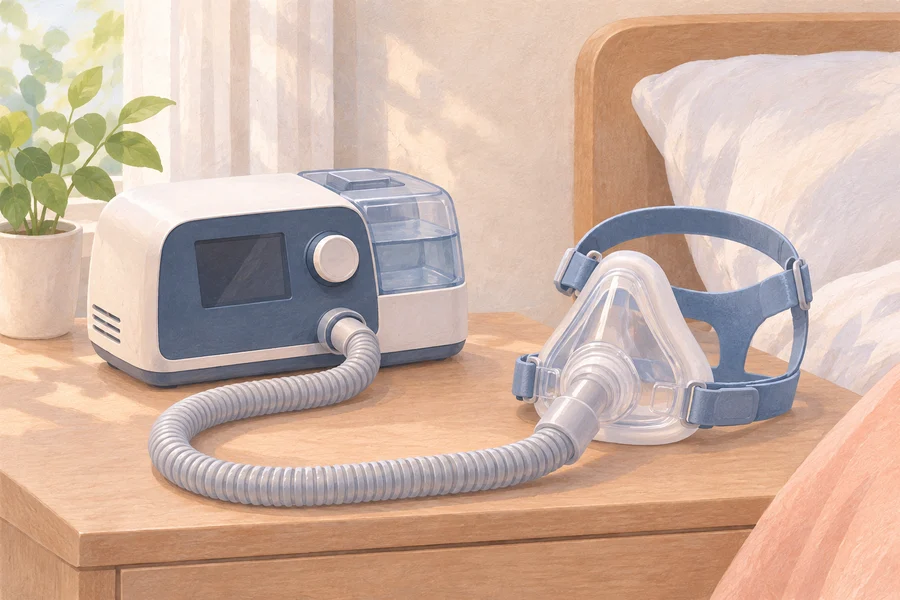
A CPAP machine, mask and connecting hose

CPAP does open the airway by delivering pressurized air during sleep, but quite a few people cannot get used to wearing it long term and stop, because of the pressure of a mask strapped to the face every night, the noise and a dry mouth.

05 · Treatment at Our Clinic

Two treatment plans to fit your visit schedule

We assess where the teeth meet, how the jaw moves and the state of the airway during sleep as a whole.
We choose an appliance based on those findings and on whether long-term visits are possible, and may combine it with fine bite adjustment as needed.

If long-term treatment is possible

Custom MCB Splint

+ Fine Bite Adjustment

MCB-H · For in-clinic treatment
MCB-L · For sleep

We make an MCB splint to match your jaw position and tooth contacts, to help guide the lower jaw and tongue base forward when they have been pushed back. At regular visits, we check jaw movement and changes in the bite after you wear it and continue with any adjustments needed.

More about custom MCB treatment ↗

If long-term treatment is difficult right now

Thermo Splint

+ Fine Bite Adjustment

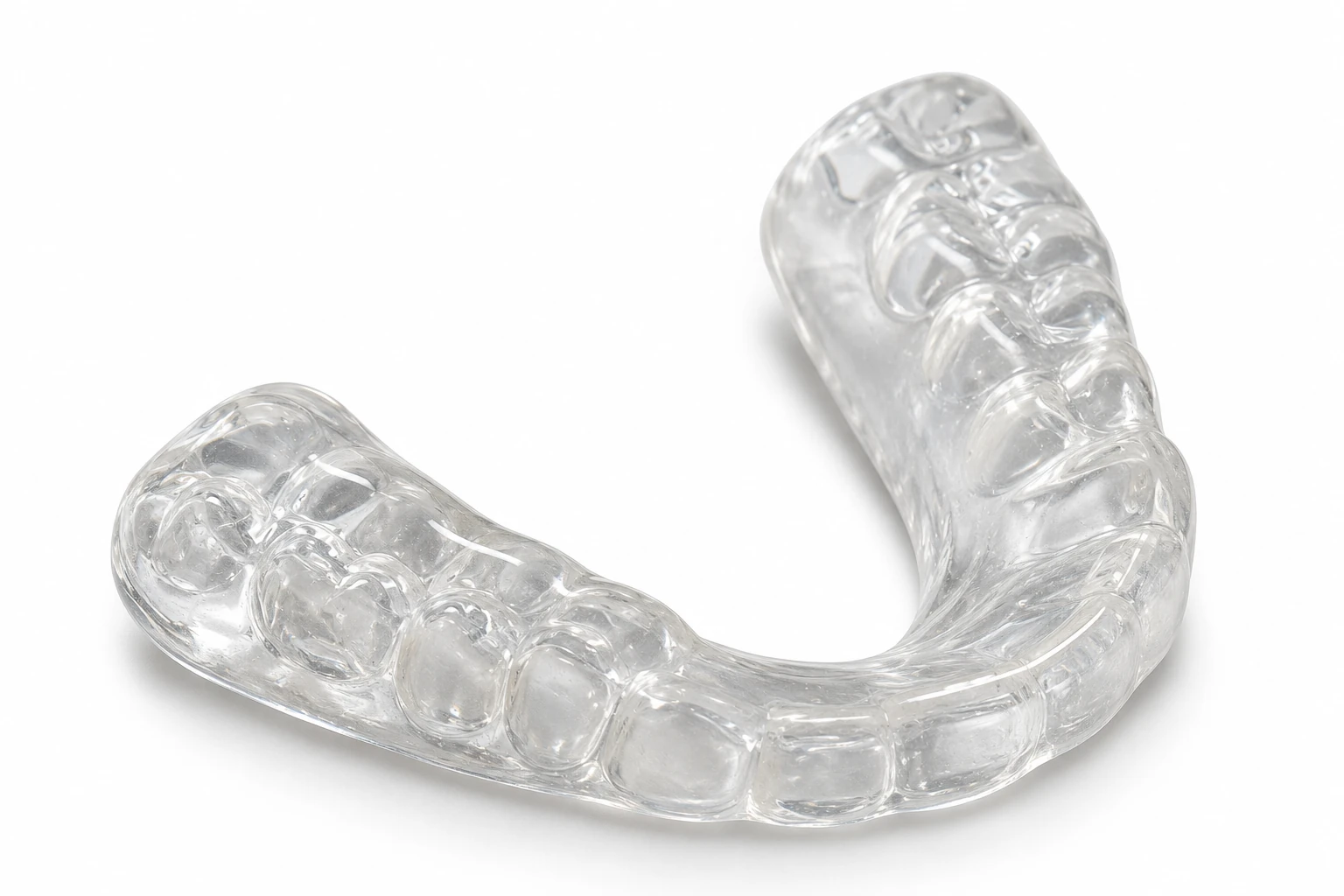
Clear thermoplastic Thermo splint

We make a thermoplastic Thermo splint to fit the shape of your teeth, to reduce the tendency of the lower jaw to drop back during sleep. We explain how long to wear it and what to watch for during use, and set the next checkup around your availability.

More about the Thermo splint ↗

06 · Everyday Habits

Resting-position habits to protect the airway day and night

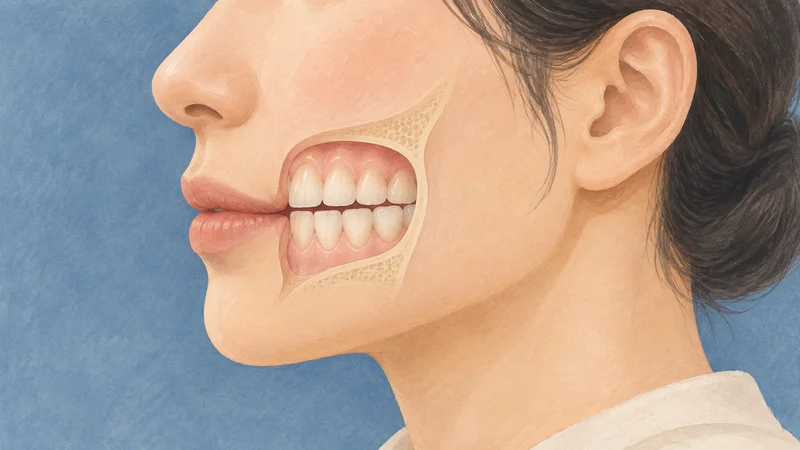
  1. Diagram of lips lightly closed with the teeth apart

    01. Make nasal breathing a habit and reduce mouth breathing

    When you sleep with your mouth open, the lower jaw rotates backward and the airway narrows sharply. During the day too, practice keeping your lips lightly closed and breathing through your nose.

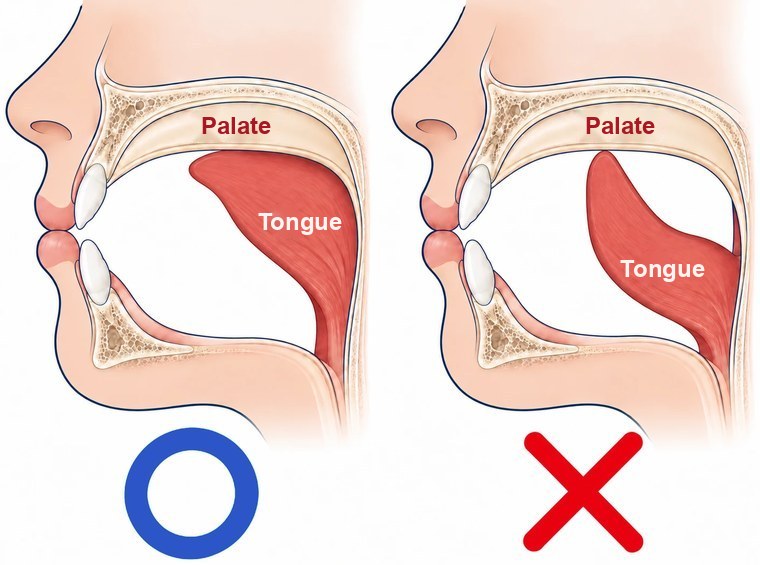
  2. Drawing comparing the positions of the tongue and the roof of the mouth

    02. Rest your whole tongue against the roof of your mouth

    Placing your tongue so that it touches the whole roof of your mouth, starting about 2 cm behind the front teeth, can reduce the tendency of the lower jaw and tongue base to drop back.

  3. A person lying on their side with the head and neck supported by a pillow

    03. Check your sleeping position and pillow height

    A pillow that is too high pulls the chin toward the chest and narrows the airway, so use a height that supports the natural curve of the neck and, where possible, try lying on your side.

  4. A person resting and reading quietly with a drink set aside

    04. Avoid alcohol and sedating substances before bed

    Alcohol and sleep-inducing ingredients can lower the tone of the tongue and throat muscles too far during sleep and worsen the tendency of the tongue base to block the airway.

If you are concerned about a sleeping pill or sedative you are taking, talk to the clinician who prescribed it, and do not change the dose or stop taking it on your own.

Book a Consultation Call Us +82-2-3661-2211