Athletic Performance

Do you clench your teeth when you exercise,
and feel your strength pull to one side?

If your jaw feels stiff or you keep clenching when you exercise,
we can look at how your jaw moves and where your teeth touch.

If force does not transfer evenly, or a particular joint keeps hurting, during weight training, golf, running or tennis, have your movement and training load checked. If your jaw tenses during exercise or you also have pain when chewing, our clinic assesses jaw joint movement, tooth contacts and irritation of the soft tissue in the mouth.

Book a Consultation ↗
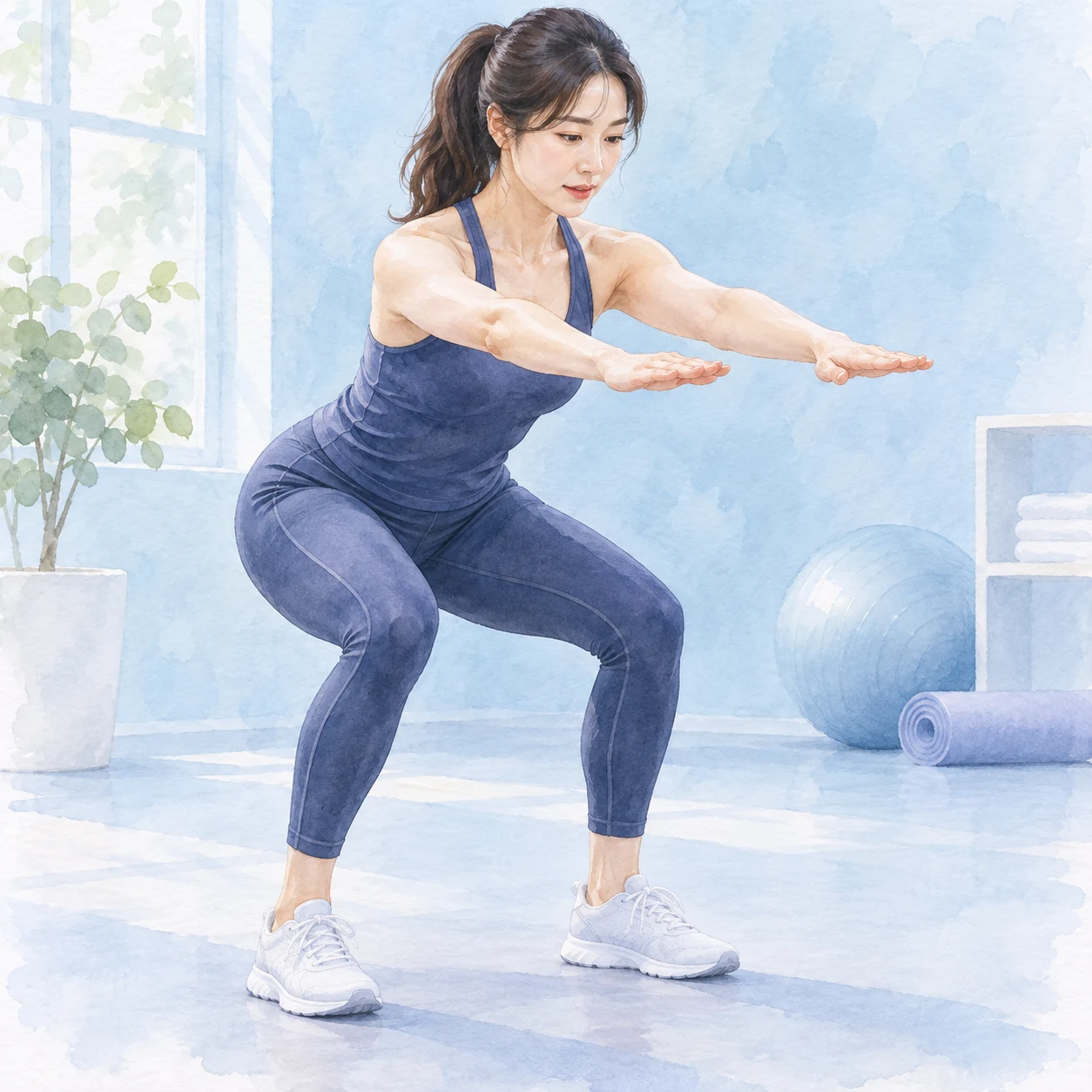
A person in workout clothes checking their posture before a squat

01 · Symptom Check

From clenching under a heavy lift to a swing or landing that pulls to one side,
your balance may be breaking down during exercise

Many factors contribute to left–right differences you feel during exercise, including joint range of motion, fatigue, previous injuries and training load. If clenching or jaw pain also keeps recurring, notice which movements bring on both symptoms together.

  • Unconscious clenching and one-sided force during exercise

    When you exert yourself, as in squats or deadlifts, you may bite down hard with your teeth twisted to one side, and strength or range of motion may feel different on the left and right.

  • Limited upper-limb movement at the shoulder, elbow and wrist

    During a golf or tennis swing or an overhead movement, one shoulder may catch as if pinched, or a recurring ache may develop on the outside of the elbow or in the wrist.

  • Pelvic rotation and the hip and knee drifting off track

    In lunges, squats or sitting cross-legged, the front of the groin may feel pinched, or the inside of the knee may twinge when you go down stairs or run.

  • Reduced sense of balance and recurring ankle instability

    You may feel unsteady when you walk on level ground or land, and one ankle may roll and twist often even when there is nothing to trip on.

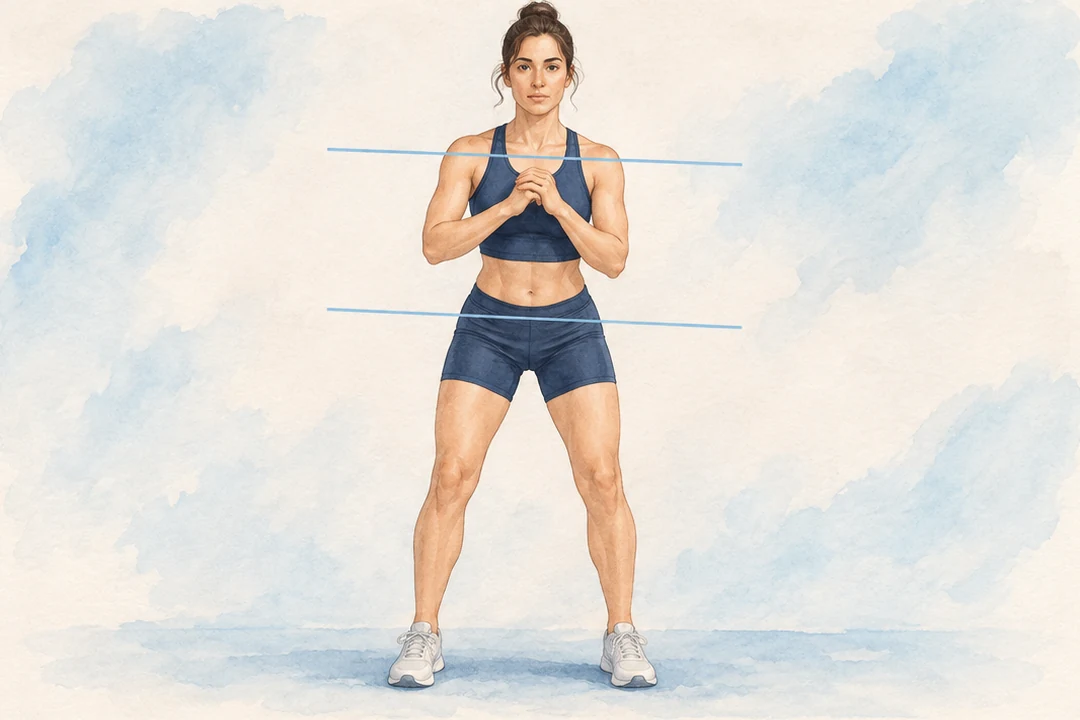
Drawing comparing shoulder and pelvis height in the squat set-up position
Clenching and left–right balance in movement
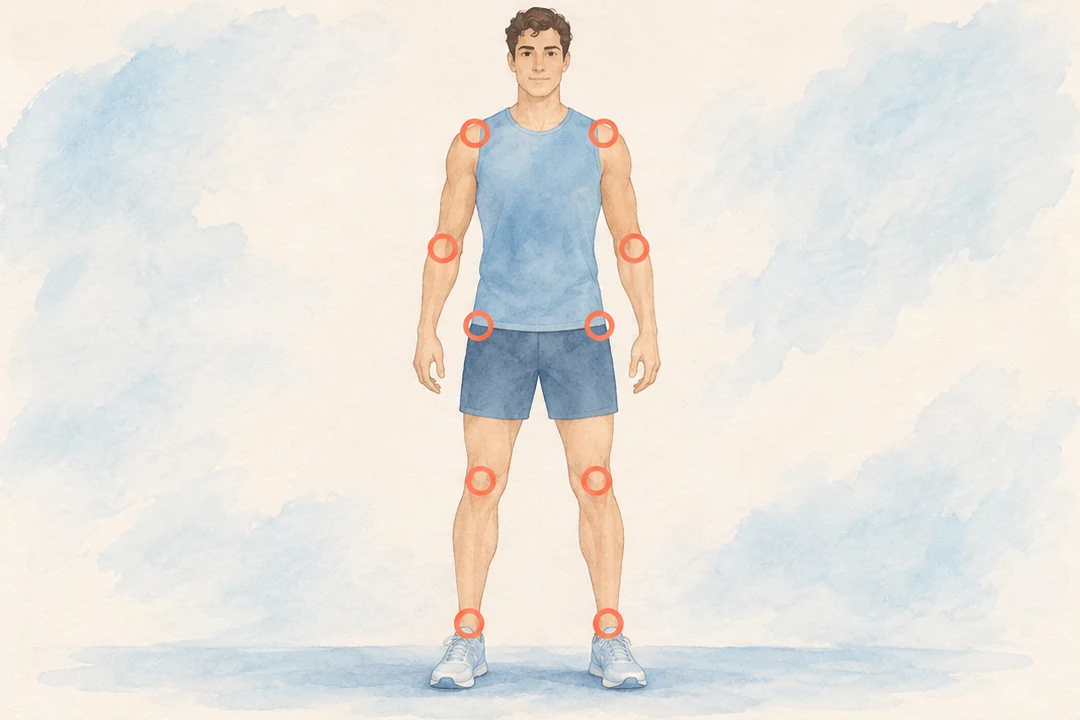
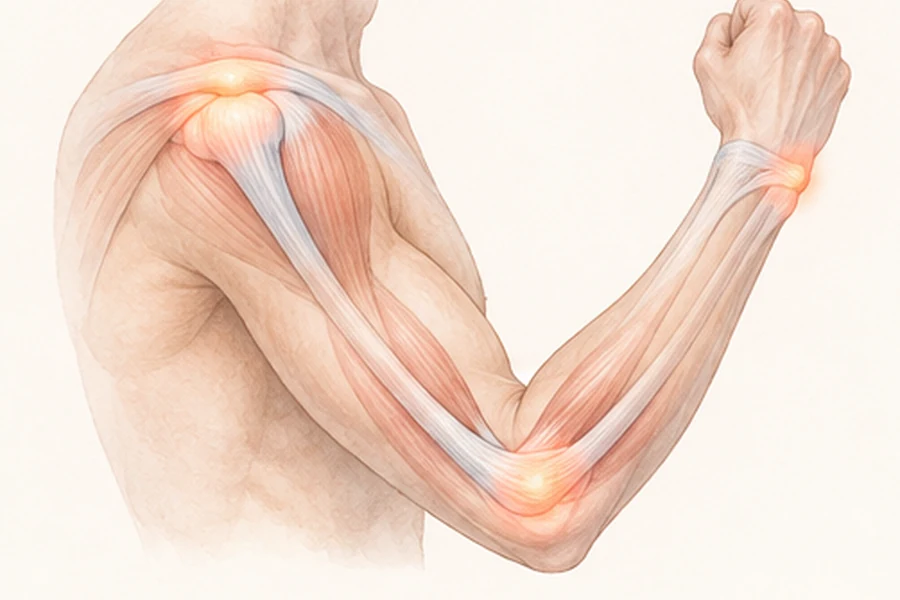
Drawing marking the positions of the shoulder, elbow, hip, knee and ankle
Exercise movements and recurring joint discomfort

02 · Causes

How do jaw sensation, whole-body balance and the upper- and lower-limb
kinetic chains work during exercise?

Balance draws on several senses, and movement relies on several joints working together. If you have discomfort in the jaw or teeth, we assess those symptoms; pain or restricted movement in the arms and legs is checked together with the training load on each area.

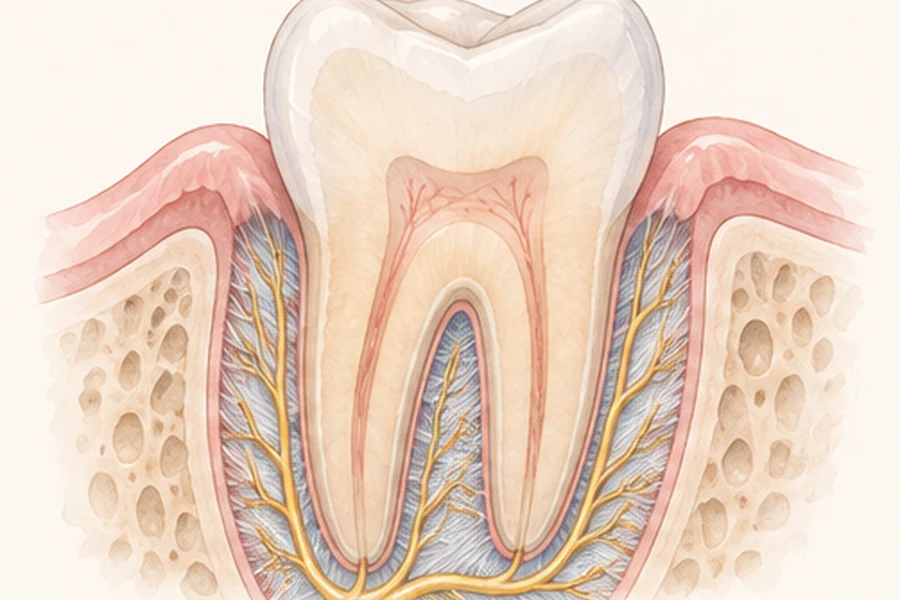
  1. Sensation and balanceProprioception in the periodontal ligament and jaw joint

    The periodontal ligament responds to pressure on the teeth, and sensory signals from around the jaw help regulate biting force and movement. Whole-body balance involves vision, the vestibular system and proprioception from the whole body together. It is difficult to conclude that a tiny tooth contact alone changes whole-body balance or reflex responses.

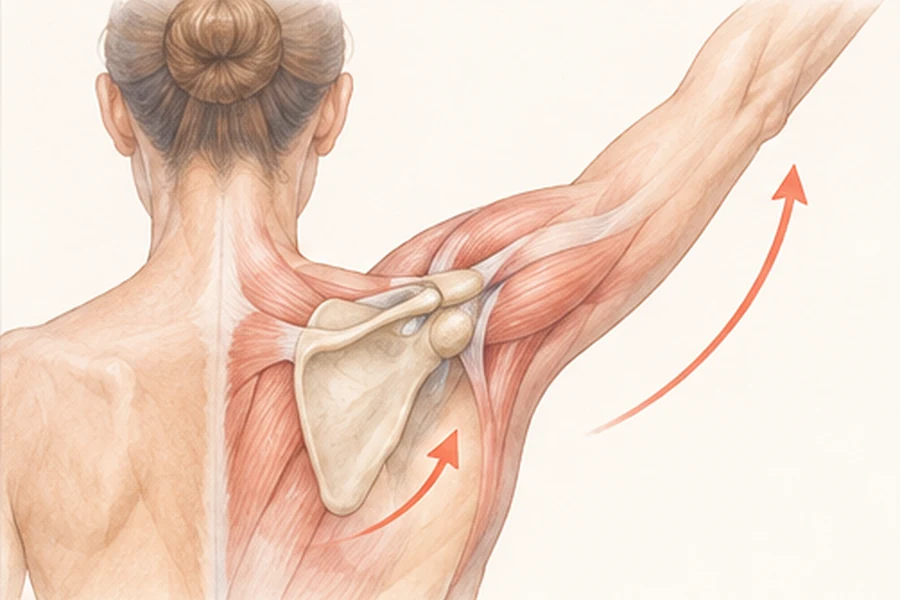
  2. Upper-limb kinetic chainScapulohumeral rhythm and arm rotation

    When you raise your arm, the shoulder blade and upper arm bone move together. Swings and overhead movements can vary with shoulder range of motion, strength and repeated training load. If you have discomfort in the elbow or wrist, movement in that area is also examined.

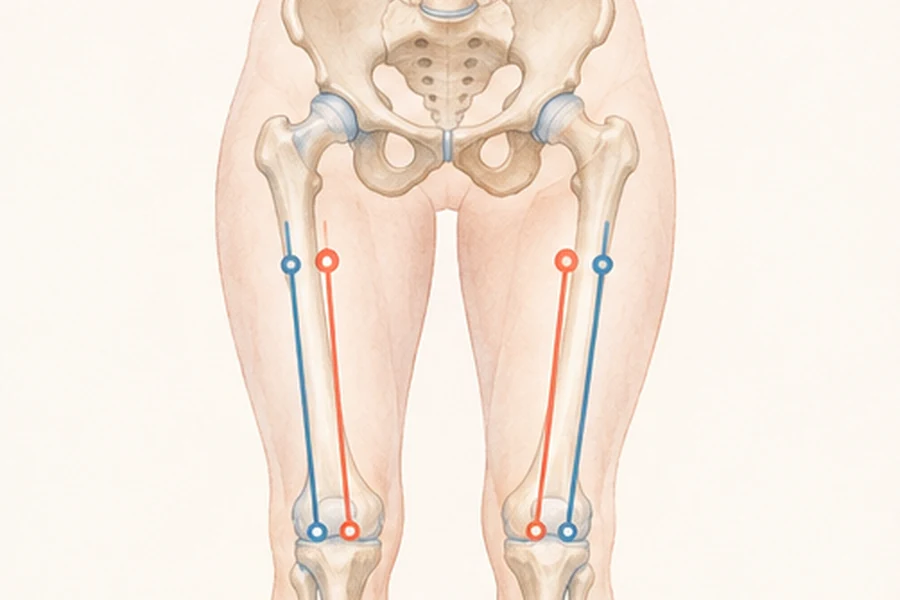
  3. Lower-limb kinetic chainPelvic movement, femoral rotation and the Q angle

    In a squat or landing, the pelvis, hip, knee and ankle move together. The Q angle is one indicator of the direction of the thigh and the patellar tendon. To assess the load on the knee during movement, joint range of motion and the actual movement are checked as well.

03 · Problems That Can Develop

When a particular joint or tendon is loaded repeatedly in training,
pain can appear with certain movements

Even when no major tear is found, pain can arise from repeated movement, increased load, restricted range of motion and previous injuries. The cause is assessed according to the sport and the site of pain.

① Shoulder impingement symptoms and overload of the elbow and wrist

If the shoulder catches when you raise your arm, shoulder range of motion and shoulder blade movement can be examined. Recurring pain on the outside of the elbow during swings or weight training may be related to tennis elbow, and wrist pain on the little-finger side to conditions such as triangular fibrocartilage complex (TFCC) injury, so each needs its own assessment.
② Groin pinching (hip impingement) and restricted range of motion

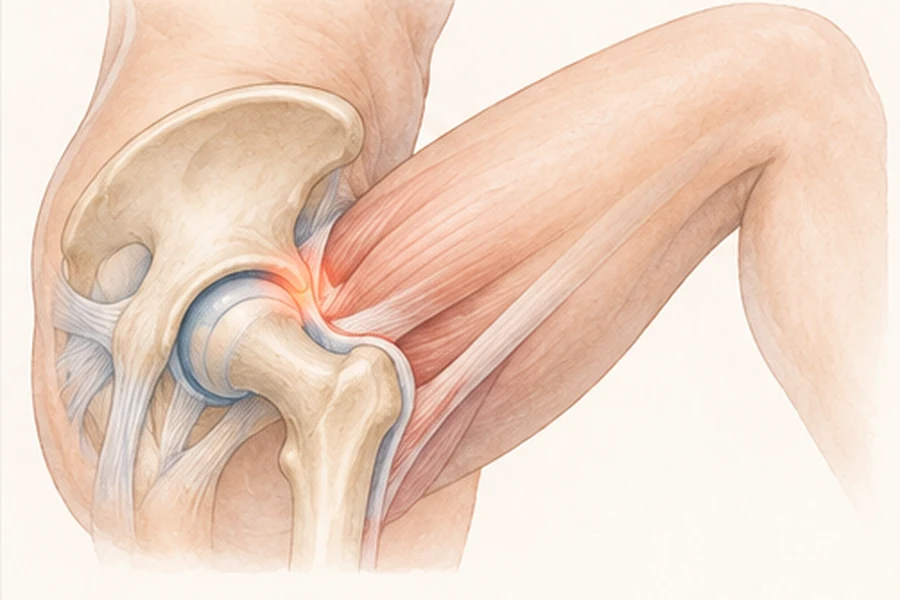
If the groin feels pinched or range of motion is limited when the hip is deeply flexed, as in a squat or lunge, conditions such as femoroacetabular impingement, where the femur and the hip socket come into contact, can be considered. Hip movement and the positions that bring on pain are checked together.

③ Pes anserine tendinitis on the inside of the knee and pain around the kneecap

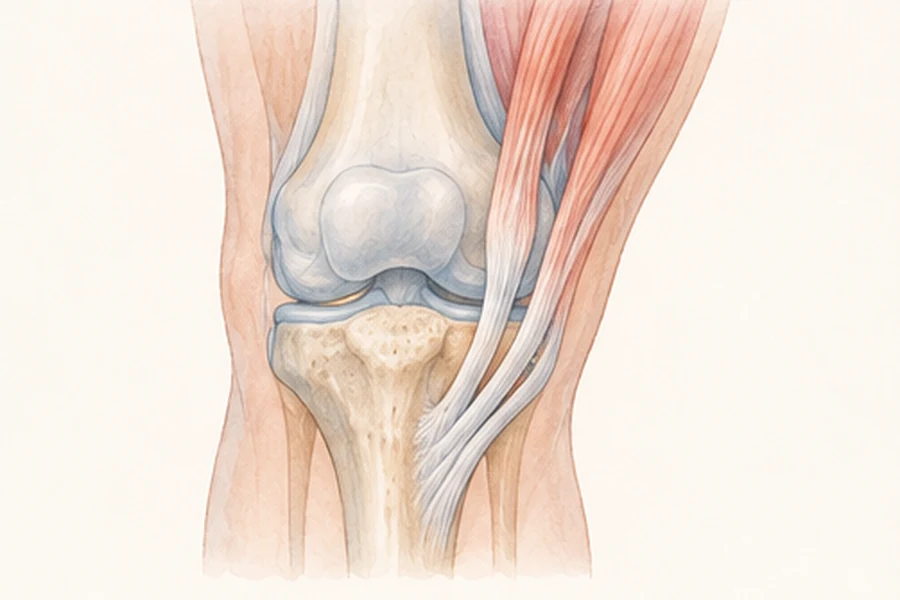
If the inside of the knee aches when you run or go down stairs, overload around the pes anserine tendons may be involved. Pain around the kneecap is checked separately for its location and pattern. Looking at changes in training volume together with lower-body movement helps identify the movements that bring on pain.

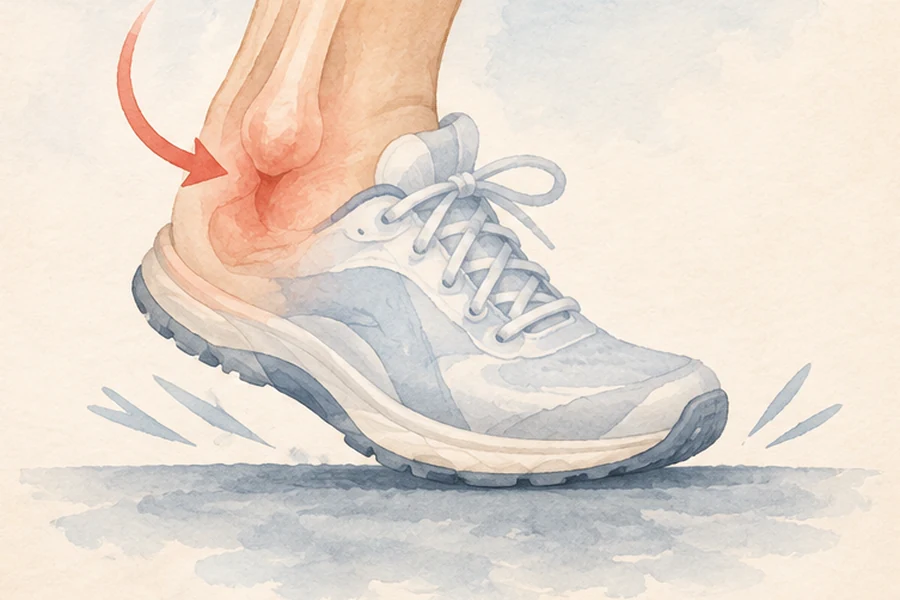
④ Recurring ankle instability when landing and changing direction

If balance or joint stability is reduced after an ankle sprain, the ankle may roll repeatedly when you land or change direction. Previous injuries, ankle range of motion and single-leg stance are among the things assessed.

04 · Limits of Conventional Approaches

If pain keeps recurring during exercise,
it is time to look again at movement and joint condition

Local rehabilitation and protective equipment are used according to the injury and the sport.
If pain keeps recurring, the joint and tendon concerned are reassessed, and clenching or jaw pain can be checked separately at a dental clinic.

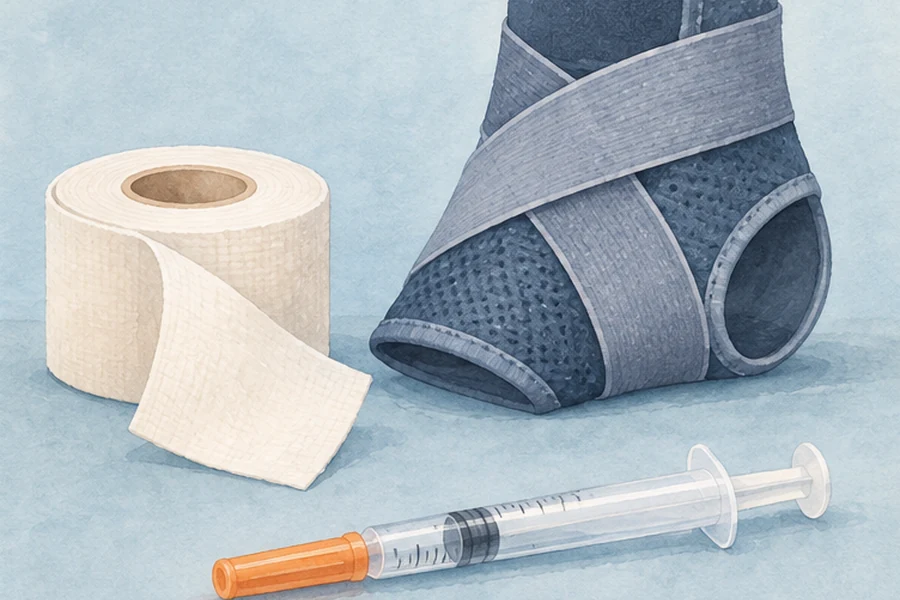
Limits of local rehabilitation, injections or taping alone

Rehabilitation exercise, taping and injections can help depending on the type of injury. If pain recurs when you return to exercise, review exercise intensity and technique, recovery time and range of motion with your treating clinician or rehabilitation specialist.

05 · Treatment at Our Clinic

Two treatment plans to fit your visit schedule

We check where the teeth meet, how the jaw moves and where the soft tissue is irritated, and look at when clenching or jaw discomfort appears during exercise.
We choose an appliance based on those findings and on your exercise and visit schedule, and may combine it with fine bite adjustment as needed.

If long-term treatment is possible

Custom MCB Splint

+ Fine Bite Adjustment

MCB-H · For in-clinic treatment
MCB-L · For sleep

We make an MCB splint to match your jaw position and tooth contacts. At regular visits, we check jaw movement and the bite after you wear it and continue with any adjustments needed. We also check whether your jaw tenses during exercise and how jaw pain and range of motion change.

More about custom MCB treatment ↗

If long-term treatment is difficult right now

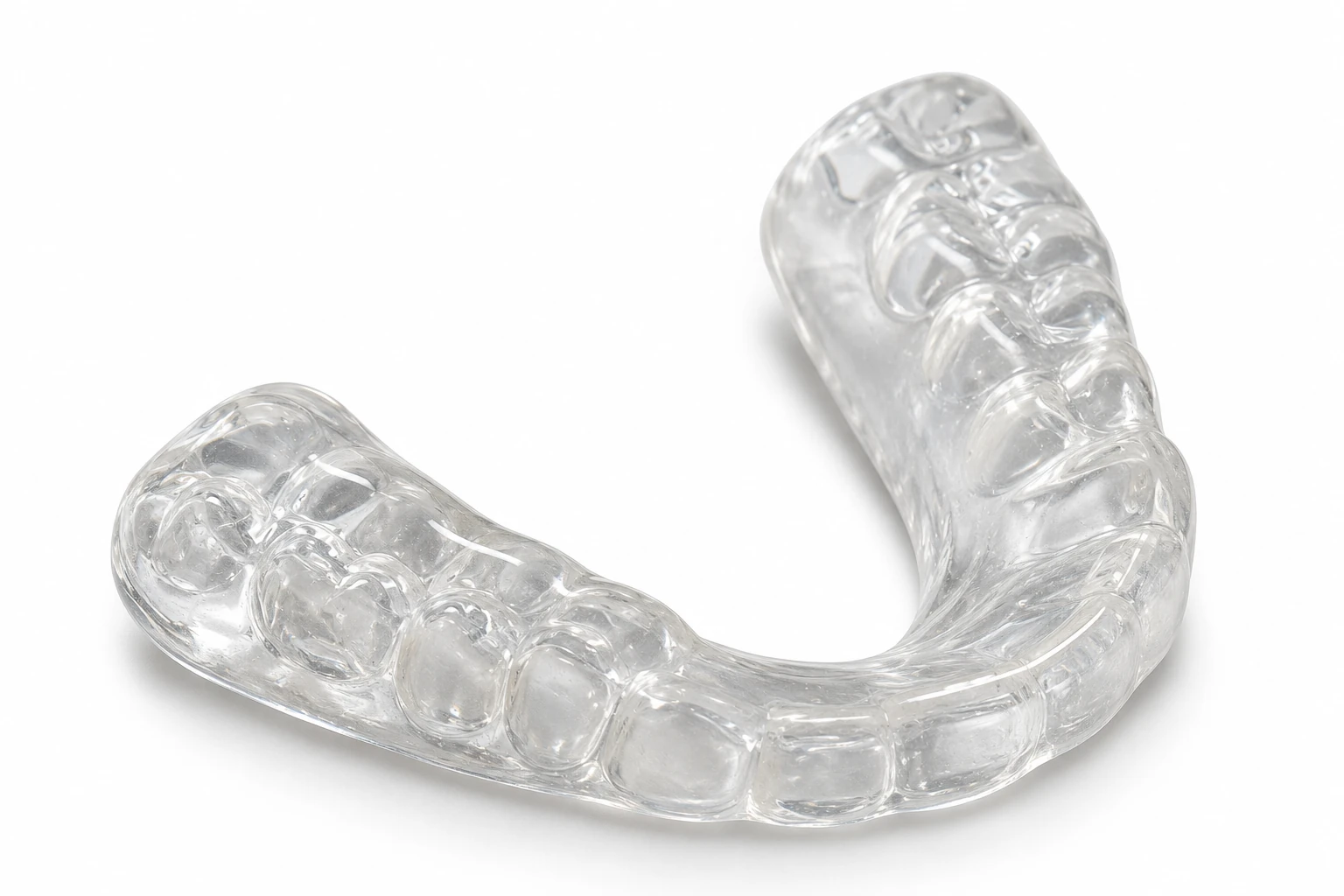
Thermo Splint

+ Fine Bite Adjustment

Clear thermoplastic Thermo splint

We make a thermoplastic Thermo splint to fit the shape of your teeth. We explain how long to wear it and what to watch for during use, and set the next checkup around your availability. We also check how clenching during sleep and morning jaw discomfort change.

More about the Thermo splint ↗

06 · Everyday Habits

Everyday habits for noticing jaw and neck tension before and after exercise

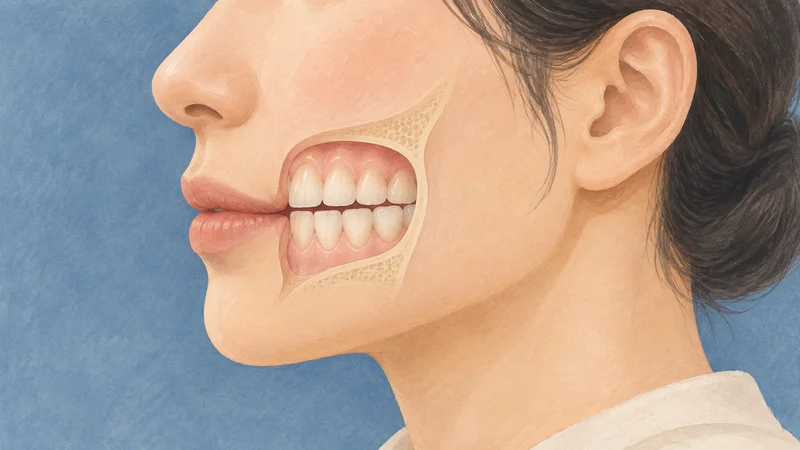
  1. A relaxed jaw with the upper and lower teeth slightly apart

    Avoid clenching on one side during heavy or explosive movements

    Notice whether you keep biting hard on the molars of one side during exercise. Between sets, keep your upper and lower teeth slightly apart and let your jaw relax.

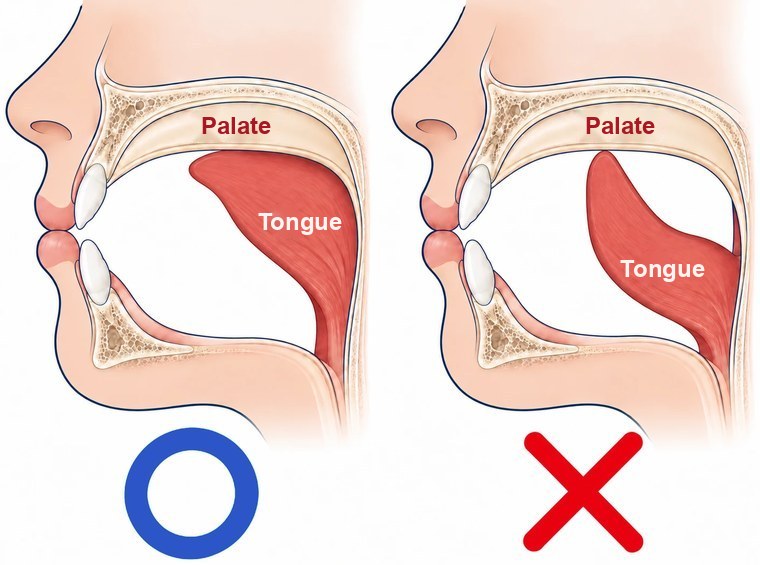
  2. Drawing comparing the tongue touching the front of the roof of the mouth and the tongue curled back

    Relax your jaw and breathe comfortably

    When resting or warming up lightly, try breathing with your tongue resting comfortably against the roof of your mouth. During exercise, breathe in a way that suits the intensity; there is no need to force your mouth shut to breathe only through your nose.

  3. A pillow comfortably supporting the head and neck when lying on one side

    Loosen the jaw, neck and shoulder girdle before and after exercise

    Before your main workout, relax your jaw and neck and move your shoulder blades gently within a pain-free range. Do not force yourself to repeat movements that bring on pain.

  4. A warm towel resting lightly around the jaw in front of the ear

    Warm compress on the jaw joint and back of the neck after training

    When your jaw and the back of your neck feel stiff after training, you can try applying a towel at a comfortable temperature for a short time. Stop if it feels hot or the pain gets worse.

Book a Consultation Call Us +82-2-3661-2211